SAS Governance and Compliance Manager
SAS Governance and Compliance Manager helps you manage risk, ensure regulatory compliance and streamline internal controls. By centralizing policies, automating monitoring and providing audit-ready reporting, it reduces operational risk and simplifies compliance for internal teams and regulators.
How SAS Governance and Compliance Manager works
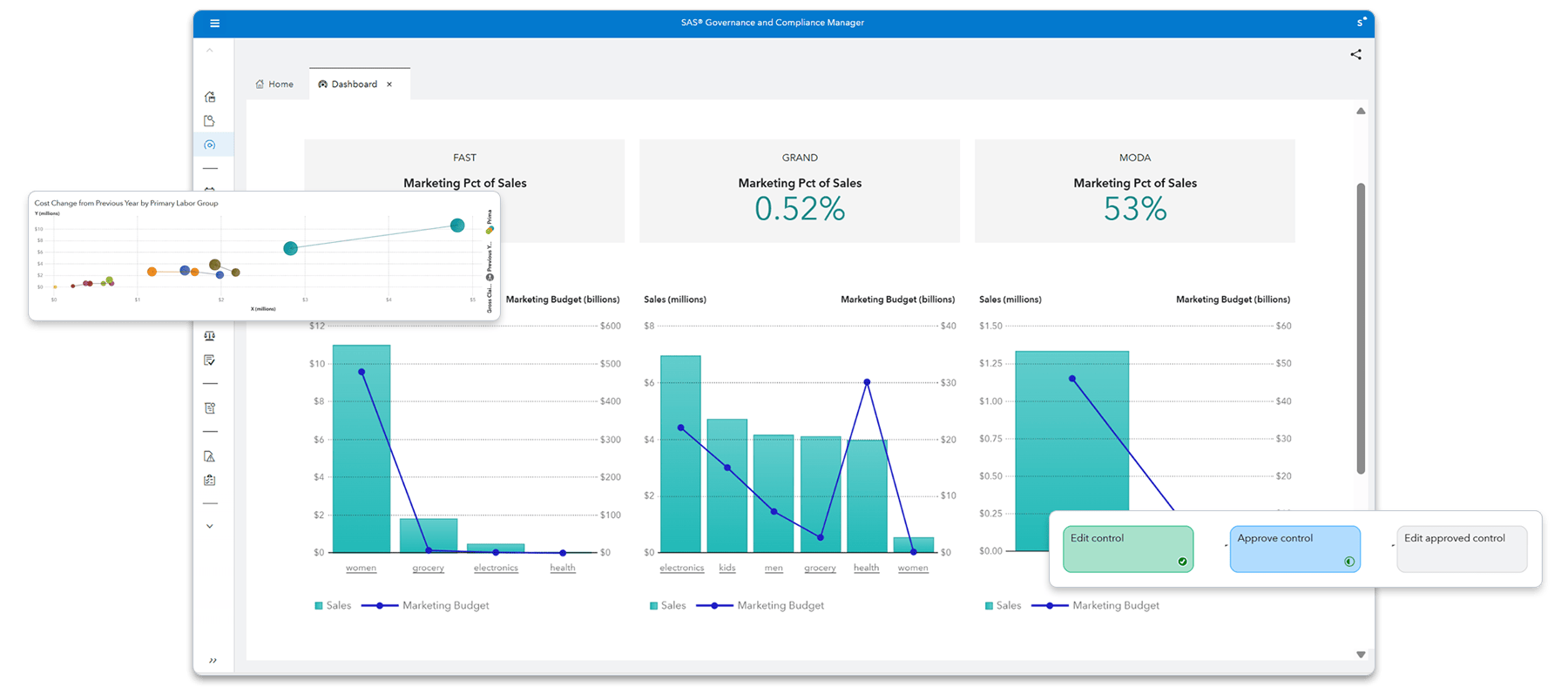
Explore how SAS Governance and Compliance Manager helps you reduce operational risk, make smarter decisions and prevent losses through centralized risk management, actionable insights for compliance and early-warning alerts to keep your business secure and efficient.
-
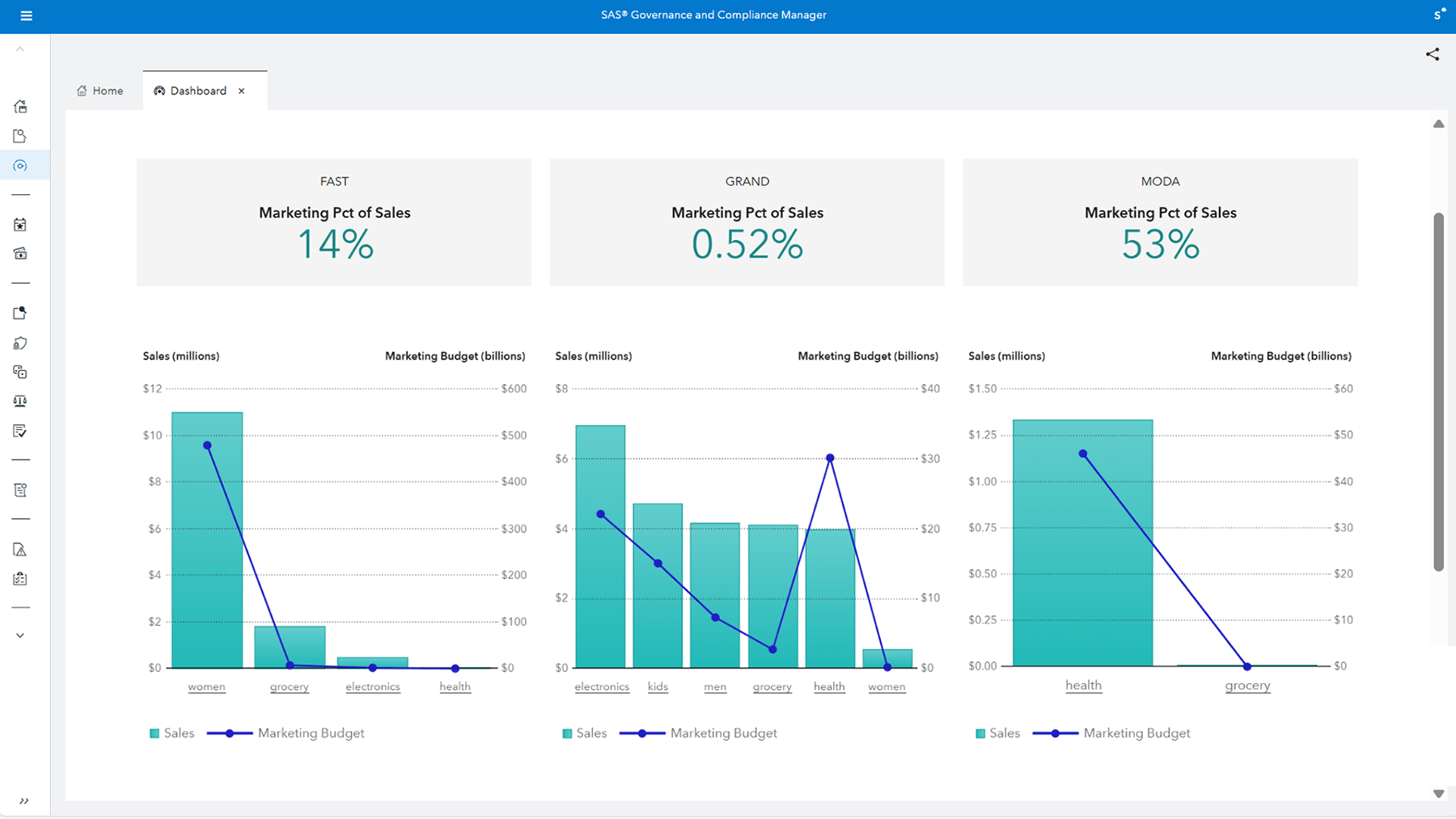
Improve operational risk & boost efficiency
Centralize risk, controls, incidents and policies in one platform. Proactively identify issues, mitigate risks and ensure compliance while automating common GRC processes. Collaborate easily across risk managers, compliance officers and auditors to eliminate duplicate processes and maintain continuous control monitoring.
-
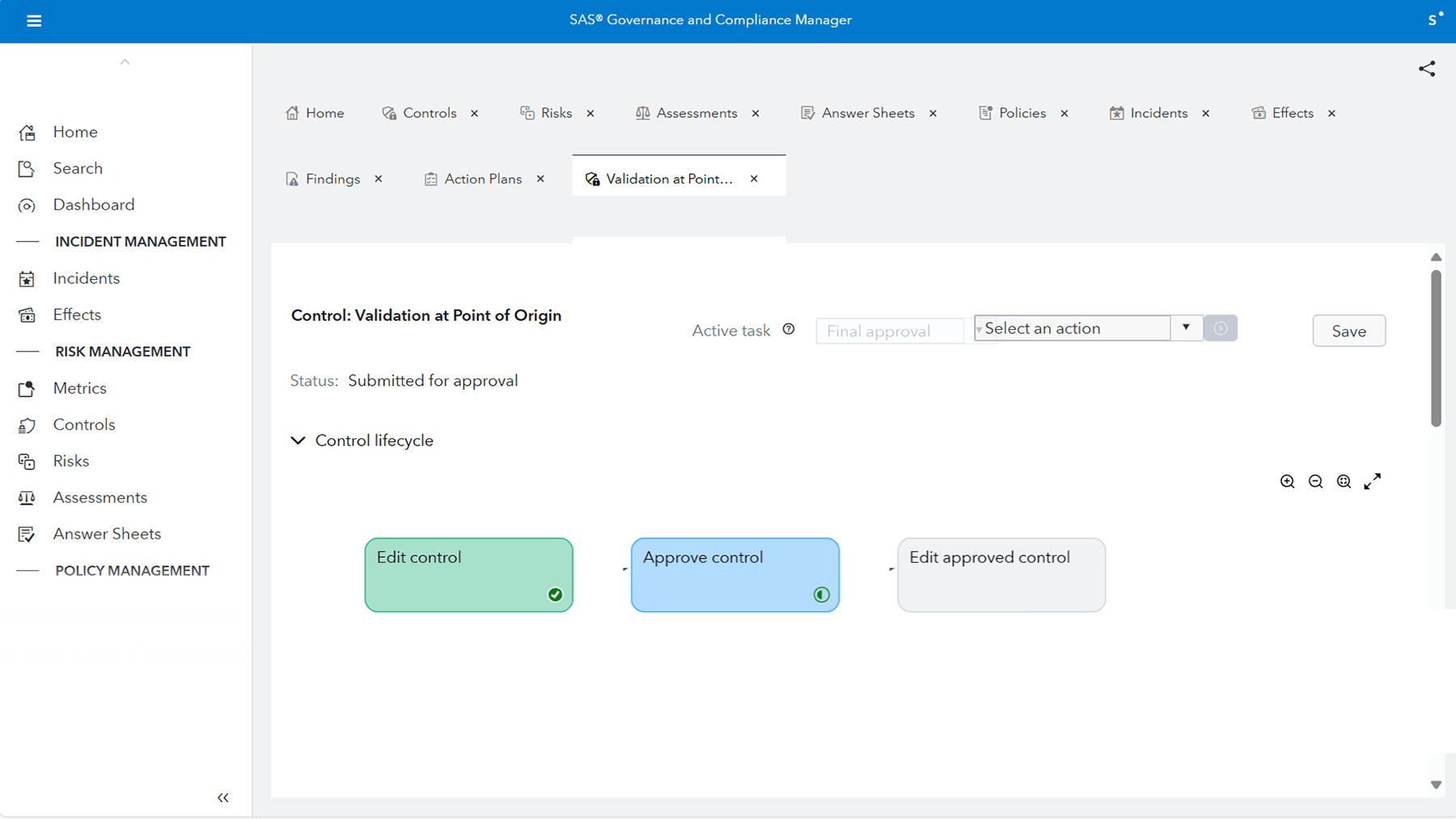
Make smarter, well-informed decisions
Gain a complete view of your compliance and risk exposures. Connect governance and compliance elements, monitor key risk indicators and integrate feedback from experts and managers to improve risk profiles, process effectiveness and overall operational performance.
-
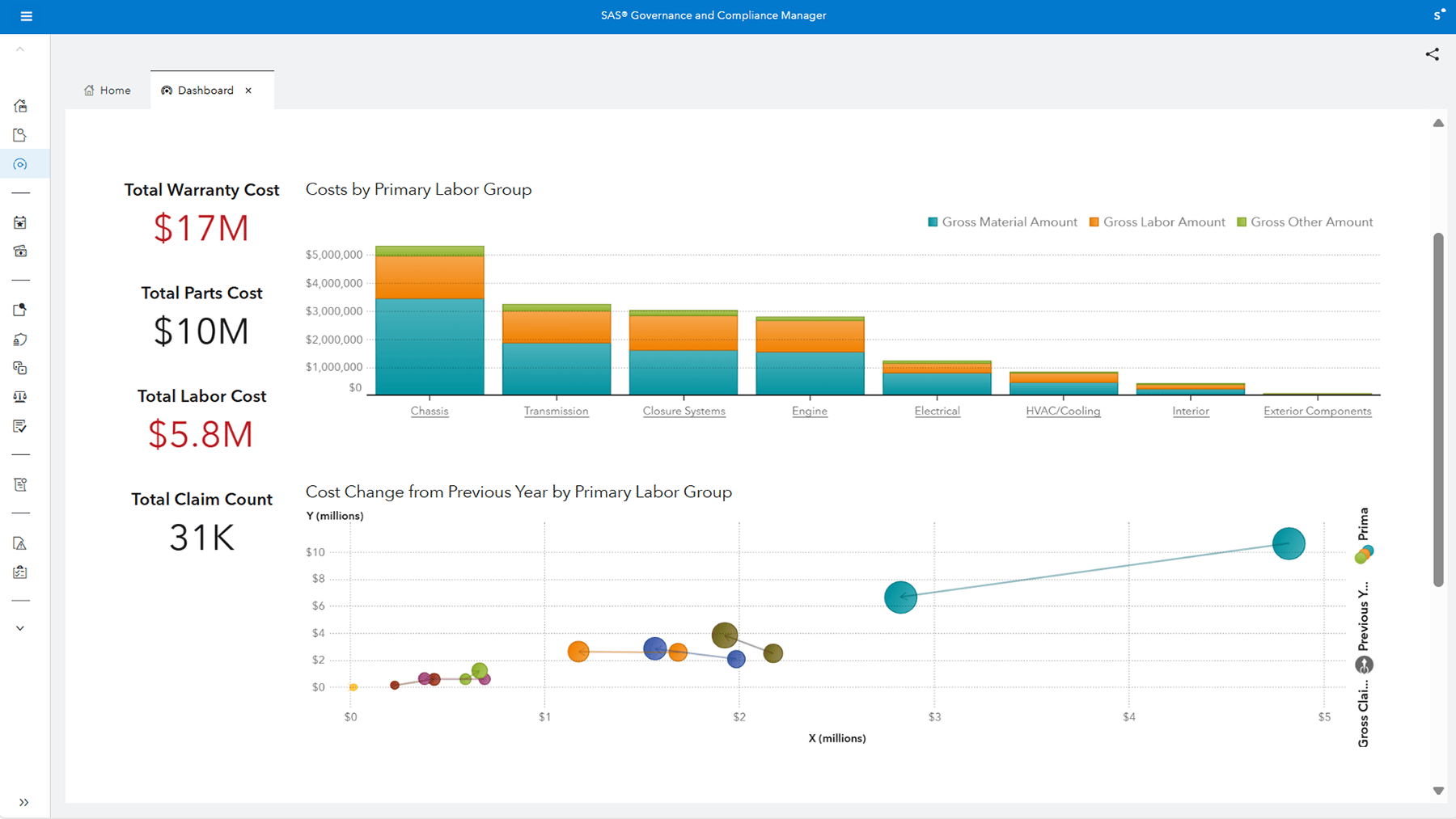
Anticipate risks & minimize losses
Receive early warnings of emerging operational risks with our comprehensive alert engine. Track incidents, monitor action plans and link past losses to failed controls and risk indicators to continuously improve compliance and prevent future issues.
Key features
Gain a reliable, integrated view of all risk exposures and compliance obligations, facilitating collaboration across GRC and finance groups while automating manual processes to reduce costs.
Common repository
Consolidates information from all financial risk management systems and provides an enterprise view of risk exposure throughout the risk management life cycle.
Visualization tools
Provides a rich library of visualization tools for management reporting for easy identification and ongoing monitoring of critical risks.
Risk management
Supports common risk management stages, including identification, assessment, response and monitoring.
Policy management
Provides an end-to-end, configurable workflow for creating standardized policies and out-of-the-box, web-based, self-service policy respondent capabilities.
Incident management
Captures and continuously monitors information from operational systems across the organization.
Audit management
Supports all key stages required by auditors to provide reliable assurance to stakeholders. Documents the details, scope, resources and schedule required for each audit.



Related products, solutions & capabilities
SAS Governance and Compliance Manager frequently asked questions
What is SAS Governance and Compliance Manager?
SAS Governance and Compliance Manager is a governance, risk and compliance (GRC) solution that helps organizations manage risk, ensure regulatory compliance and streamline internal controls. It centralizes policies, automates monitoring and delivers audit-ready reporting to reduce operational risk and simplify compliance for internal teams and regulators.
How does SAS Governance and Compliance Manager work?
The software integrates governance, risk and compliance activities into one platform. It connects risk data, control frameworks and incident reports to provide an enterprise-wide view of exposures. Automated monitoring, visualization tools and alerts help identify issues early, improve decisions and prevent future losses.
What are the key features of SAS Governance and Compliance Manager?
Key features include:
- A common risk repository for centralized data.
- Visualization tools for monitoring critical risks.
- Policy and incident management workflows.
- Audit management capabilities for full assurance and documentation.
These features work together to automate manual processes, reduce costs and improve collaboration across GRC and finance teams.
Who uses SAS Governance and Compliance Manager?
It’s designed for risk managers, compliance officers, auditors and executives in regulated industries such as financial services, health care and manufacturing. The solution helps these teams maintain compliance, reduce operational risk and strengthen internal controls.
What benefits does SAS Governance and Compliance Manager provide?
Organizations use SAS Governance and Compliance Manager to:
- Improve visibility into risk and compliance activities.
- Reduce the time and cost of audits and manual reporting.
- Ensure consistency in policy management and incident response.
- Enable data-driven decision making across GRC functions.
How is SAS Governance and Compliance Manager different from other GRC software?
Unlike standalone tools, SAS Governance and Compliance Manager is part of the SAS risk management suite, integrating seamlessly with analytics, visualization and data management tools. This unified approach supports more accurate risk modeling, better insights and faster compliance reporting.