What is SAS Intelligent Decisioning?
SAS Intelligent Decisioning is a cloud-native decision intelligence platform built on SAS Viya that orchestrates AI models with deterministic business logic – including rules and guardrails – within a governed framework to help you design, deploy and continuously improve operational and tactical decisions. It evaluates data, applies predictive models and business policies and determines the next best action, whether recommended to a decision-maker or executed automatically in real time.
How SAS Intelligent Decisioning works
SAS Intelligent Decisioning brings data, AI models, business rules and analytics together in governed decision flows that can be deployed and continuously improved at enterprise scale. Deploy decision services across Azure, AWS, Google Cloud, hybrid and on-premises environments while maintaining centralized governance and consistent decision logic.
-
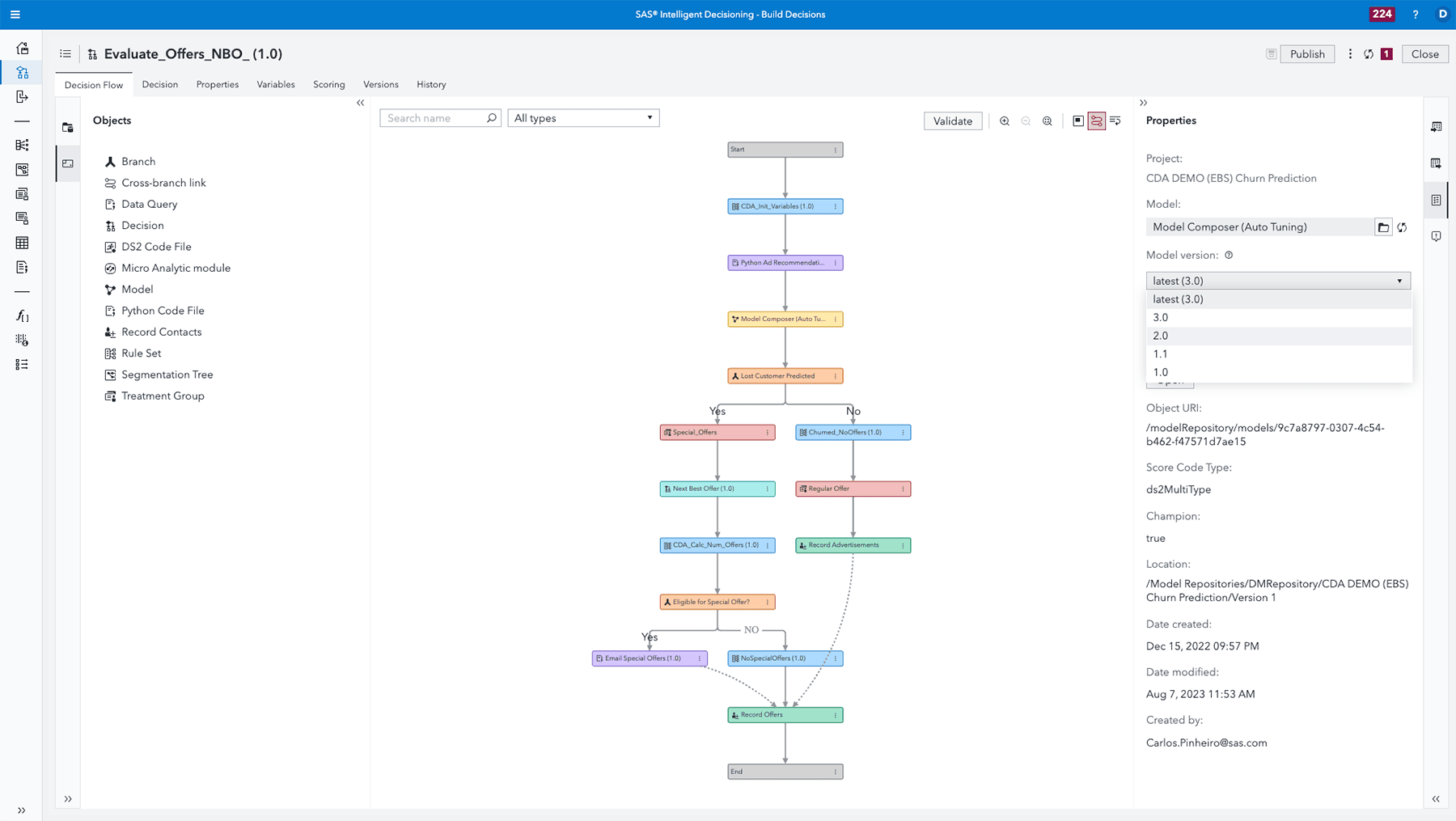
Deliver real-time decisions across every use case
Orchestrate high-volume operational and tactical decisions by combining AI models with business rules to determine the next best action in real time. Build reusable decision flows for operational, risk and customer use cases, test and validate decision logic before deployment, and execute scalable decision services across channels, workflows, streaming, edge and event-driven environments.
-
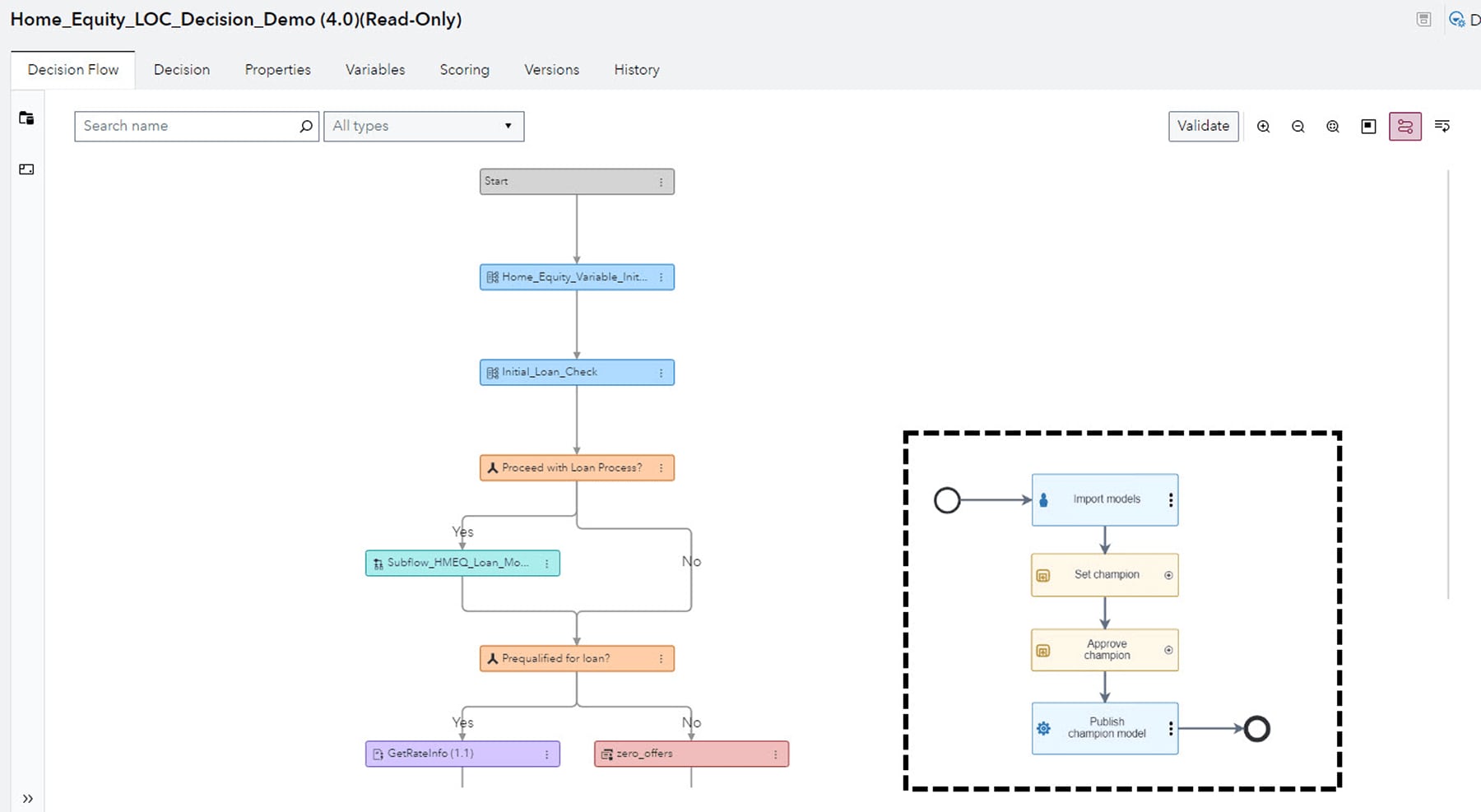
Govern decisions while your teams move faster
Give business users, analysts and data scientists a shared environment to develop and manage governed decision flows. Build flows using intuitive drag-and-drop tools or code, reuse approved business rules, analytical models and shared data assets, and use version control, change tracking, role-based approvals and governance workflows to maintain transparency, consistency and compliance throughout the decision life cycle.
-
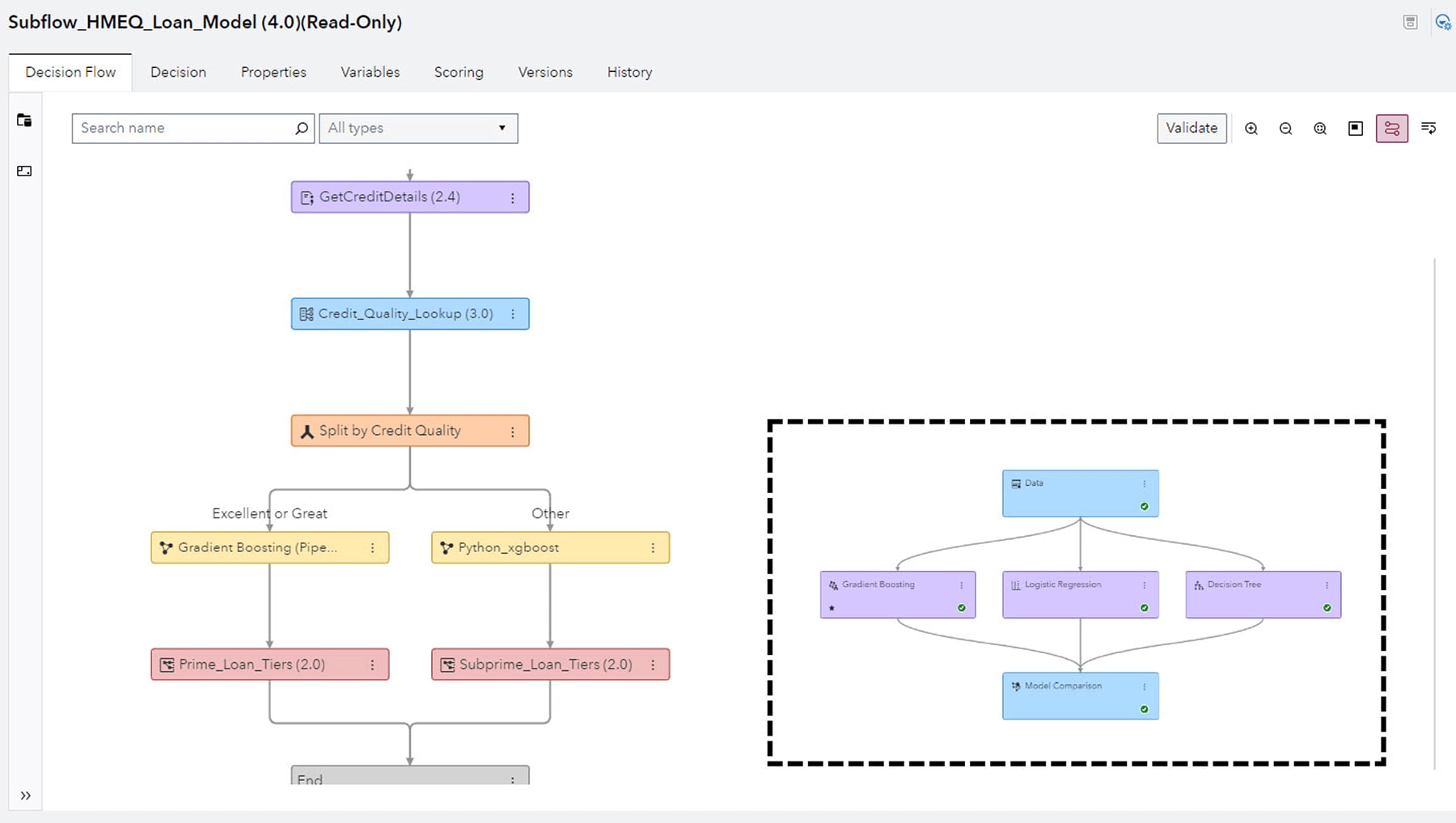
Improve decision quality with AI & analytics
Combine predictive models, machine learning and business rules within a single decision flow to deliver accurate, explainable decisions that improve over time. Evaluate multiple analytical models, balance AI recommendations with business policies and constraints, monitor decision outcomes and performance, and refine predictive models and business rules through continuous feedback.
-
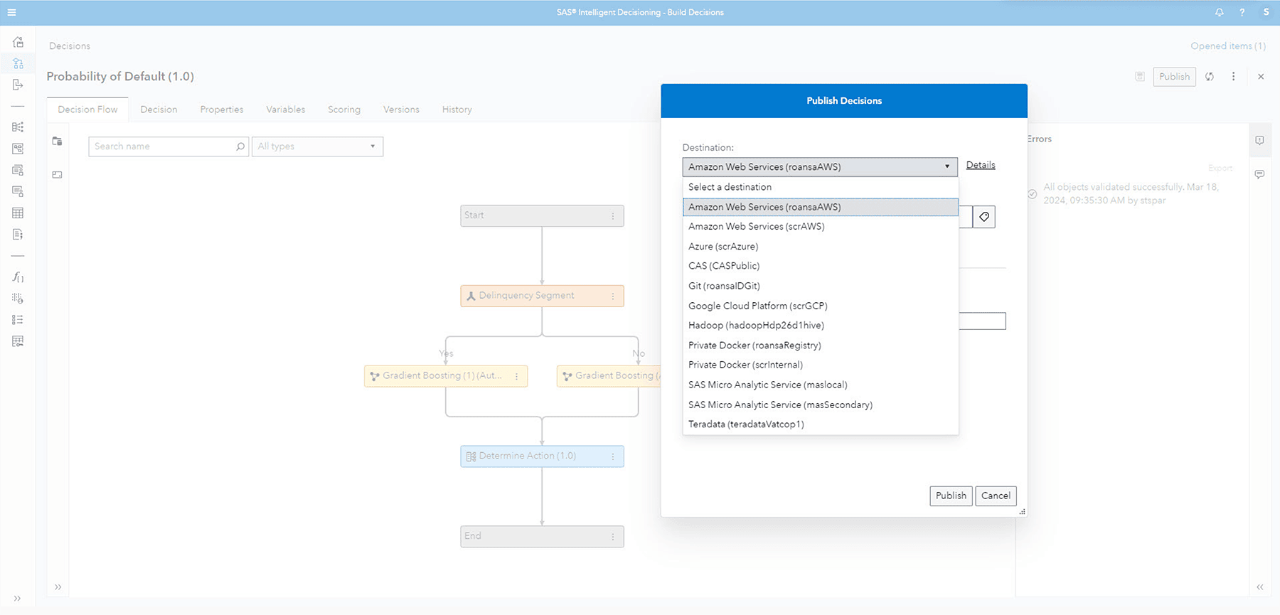
Deploy analytical models quickly & consistently
Author, test and deploy AI models and decision logic from a unified development environment, then publish decision services for consistent execution across channels and applications. Support batch, API and real-time execution, integrate external models and data sources without duplicating business logic, and monitor model health and performance with automated system alerts.
-
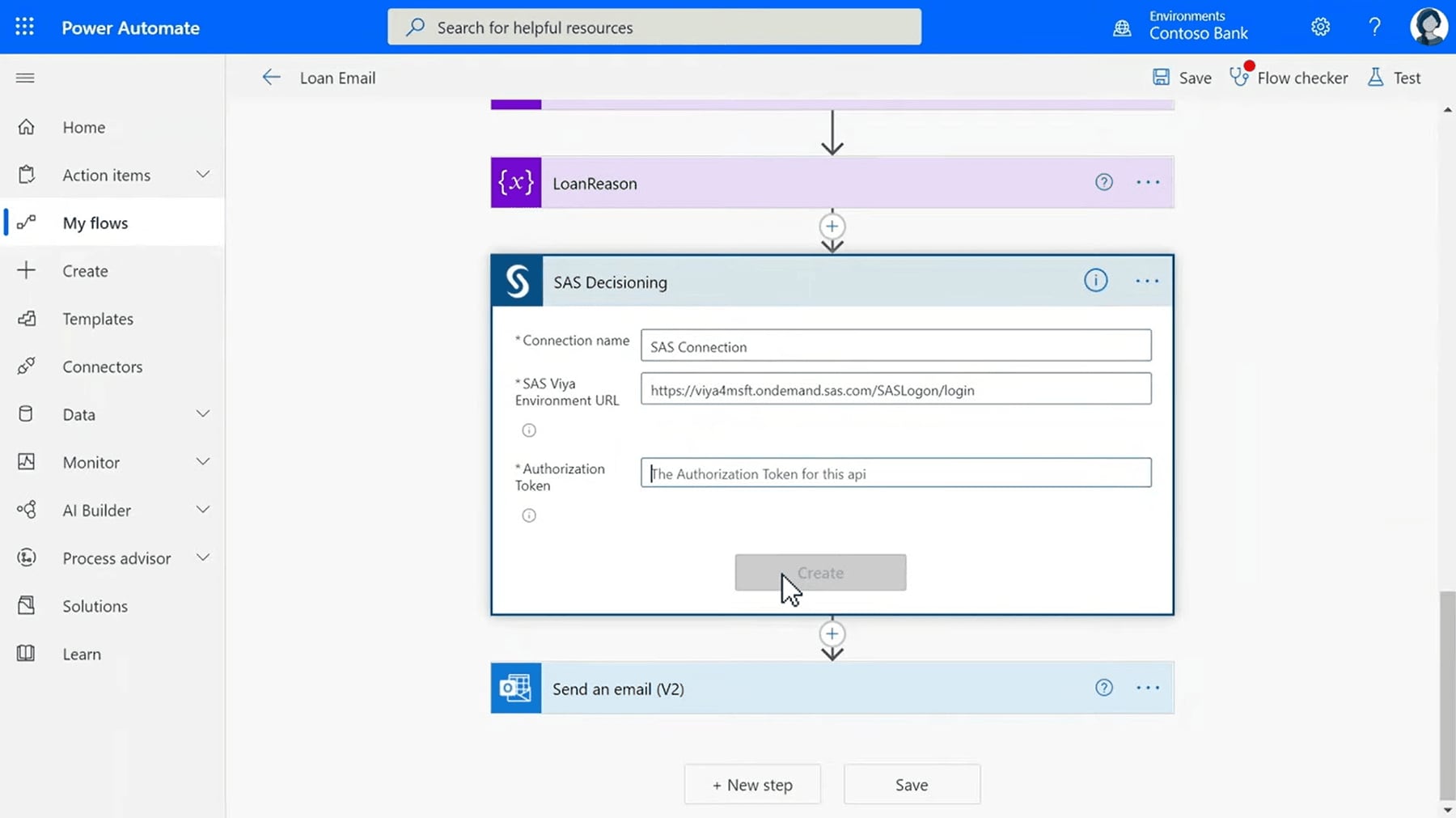
Extend decisioning inside the Microsoft Power Platform
Embed governed SAS decisioning into Microsoft business applications by connecting SAS Viya analytics and decision services with Power Apps and Power Automate. Trigger decision services directly from Microsoft workflows, incorporate AI-driven recommendations into business processes, and centralize decision logic across SAS and Microsoft environments.
-
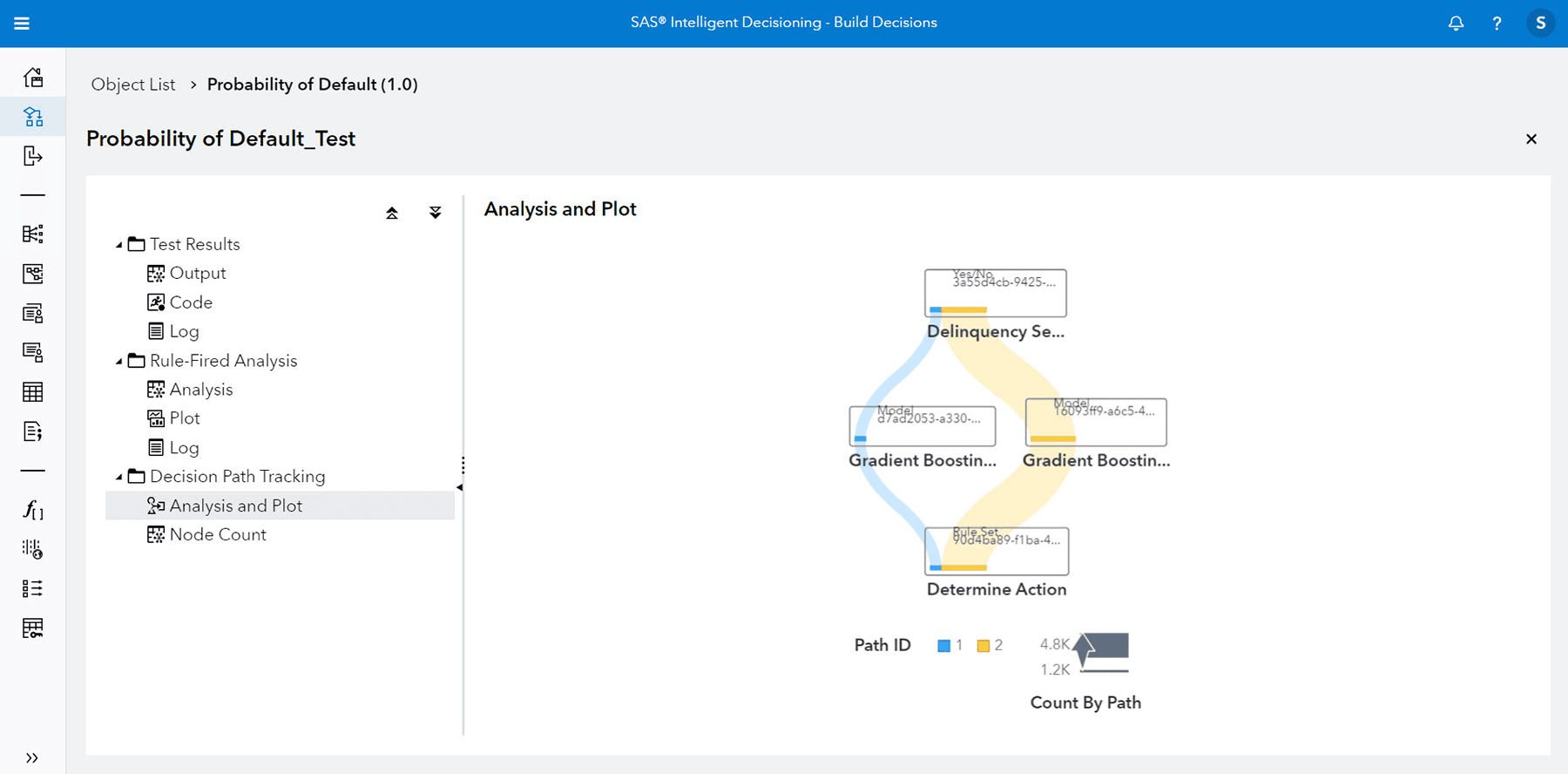
Execute more decisions with less effort
Deploy scalable, cloud-native decision services across hybrid and multi-cloud environments while maintaining governance, reliability and performance. Run SAS and Python models in OCI-compliant containers using SAS Container Runtime, publish decision services to Azure, AWS or Google Cloud, and scale high-volume operational decisioning with centralized deployment and simplified management.
Join SAS Communities and read our support documentation to explore how organizations are using SAS Intelligent Decisioning to build and run decisioning workflows.
Key features
Easily create, manage and govern robust, analytically driven business rules to power data-driven decisions at scale.
Flexible data orchestration
Integrate disparate data sources and third-party APIs using flexible message specifications to power real-time triage and reporting.
Hybrid decision orchestration
Combine machine learning models, AI agents and deterministic business logic within a single governed decision flow for greater accuracy, speed and control.
Self-service data visualization
Explore data through self-service interfaces and augmented analytics to uncover hidden patterns and share interactive reports.
Visual decision authoring
Create complex decision flows and rule sets using a drag-and-drop GUI or custom code (Python/SAS) in a unified environment.
Centralized logic governance
Maintain full version control and auditability across the decision life cycle to ensure consistency between IT and business teams.
Real-time decision intelligence
Apply high-speed analytical scoring and business rules during live customer interactions to deliver immediate, data-driven outcomes
Reusable logic assets
Create shareable content and custom functions to standardize and accelerate decisioning across the entire organization.
Accelerated life cycle management
Streamline business rule definition and deployment through integrated CI/CD processes to ensure rapid, governed responses to changing data and customer dynamics.
Integrated machine learning & model management
Bridge the gap between development and production by managing SAS and open source models in a common, monitored repository.
Cloud-native containerization
Deploy lightweight, OCI-compliant containers (SAS Container Runtime) across Azure, AWS or GCP to handle high-volume workloads.
What types of decisions can SAS Intelligent Decisioning orchestrate?
SAS Intelligent Decisioning orchestrates the AI models, analytics and business rules behind customer, risk, operational and tactical decisions across industries, including banking, insurance, retail, manufacturing, health care, telecommunications and the public sector. Organizations can use these capabilities to automate decisions, assist decision-makers and continuously improve outcomes through feedback.
Customer decisions
- Next best action
- Personalized offers
- Customer service recommendations
Risk decisions
- Fraud detection
- Credit approvals
- Claims assessment
- Compliance checks
Operational decisions
- Resource allocation
- Eligibility determination
- Supply chain optimization
- Inventory decisions
AI-assisted decisions
- Predictive recommendations
- Model-driven decisioning
- Decision optimization
- Continuous improvement through feedback


Organizations of all sizes are working smarter with SAS Intelligent Decisioning






Recommended resources for SAS Intelligent Decisioning


Related products, solutions & capabilities
- Kundenbindungsplattform | SAS® Customer Intelligence 360Individualisieren Sie jede Kundeninteraktion in Echtzeit mit einer leistungsfähigen Kundenbindungsplattform.
- SAS for Risk Modeling & Decisioning | Powered by AzureModernize risk across the organization with a trusted solution for managing analytical models and decision strategies.
- SAS® Decision BuilderExplore SAS Decision Builder, the decision intelligence platform from SAS and Microsoft for better decision making.
- SAS® Event Stream ProcessingUse machine learning and streaming analytics to uncover insights at the edge and make real-time, intelligent decisions in the cloud.
- SAS® Model ManagerSimplify the creation and management of your model collection with a web-based interface that easily automates the model management process.
- SAS® Viya®Profitieren Sie von schnellerer Data Integration, effektiver Modellentwicklung und reduzierten Cloud-Kosten.
SAS Intelligent Decisioning frequently asked questions
What does SAS Intelligent Decisioning do?
SAS Intelligent Decisioning orchestrates AI models, analytics and business rules to evaluate data and deliver real-time recommendations or actions for customer, operational and risk decisions.
How does SAS Intelligent Decisioning work?
You build governed decision flows using visual tools and business rules, add SAS or open source models, test and validate decisions, and deploy them to real-time systems or batch processes. You can monitor decision logic, models and outcomes and continuously improve them throughout the decision life cycle.
What problems does SAS Intelligent Decisioning solve?
SAS Intelligent Decisioning helps organizations respond instantly to customer behavior, personalize offers, reduce fraud, manage risk and automate complex operational decisions. It helps teams make consistent, data-driven decisions across business processes and channels.
How does SAS Intelligent Decisioning govern decisions?
SAS Intelligent Decisioning provides governance throughout the decision life cycle, from development and testing through deployment and monitoring. Teams can use version control, approvals, role-based access and auditability to maintain transparency, consistency and compliance while managing business rules, analytical models and decision logic.
Can SAS Intelligent Decisioning use AI and machine learning models?
Yes. SAS Intelligent Decisioning supports SAS, Python and open source models. You can import models from a model repository, combine them with business rules and analytics, test them within decision flows, and deploy them for real-time or scheduled decisions.
Who uses SAS Intelligent Decisioning?
Data scientists, business analysts, risk teams and IT teams use SAS Intelligent Decisioning across industries such as banking, insurance, retail, telecom and public sector.
Is SAS Intelligent Decisioning a decision intelligence platform?
Yes. SAS Intelligent Decisioning is recognized as a Leader in the 2026 Gartner® Magic Quadrant™ for Decision Intelligence Platforms. Decision intelligence combines data, analytics, AI and business logic to support and improve decisions. SAS Intelligent Decisioning puts these capabilities into practice by orchestrating AI models with deterministic business logic within governed decision flows to design, deploy and continuously improve operational and tactical decisions.
What are the benefits of using SAS Intelligent Decisioning?
SAS Intelligent Decisioning helps organizations make faster decisions, improve decision quality, maintain consistent governance, simplify model deployment and reduce operational costs.
Does SAS Intelligent Decisioning support real-time decisions?
Yes. SAS Intelligent Decisioning can evaluate data and apply decision logic in milliseconds, enabling organizations to make real-time decisions for use cases such as customer engagement, fraud detection and transaction approvals.
How is SAS Intelligent Decisioning deployed?
SAS Intelligent Decisioning runs on the SAS Viya platform, which is cloud-native and supports deployment on public cloud, private cloud or on-premises environments. Organizations can run decision services in batch, real time or through APIs and containerized deployments.
How does SAS Intelligent Decisioning integrate with existing applications?
Organizations can expose decision services through APIs and integrate them with business applications, operational systems and event-driven workflows.