
What is decisioning?
Decisioning is a process that leverages AI, business rules and real-time analytics to help organizations automate complex choices in areas such as fraud detection, credit evaluation, claims processing and customer experience personalization. Decisioning enables you to act faster, more consistently and with greater confidence by putting data-driven insights into every moment of interaction.
Why decisioning matters now
Organizations are under increasing pressure to make faster, more accurate decisions at scale. The rise of AI, data volume, and real-time expectations is transforming how decisions are made.
69%
share of decisions made during a customer engagement that will be completed by smart machines by 2030
402M
terabytes of data created daily, providing organizations with opportunities to serve customers better
50%
business decisions that will be augmented or automated by AI-powered decision intelligence by 2027
Together, these trends show a clear shift toward AI-driven, automated decisioning across areas such as fraud prevention, risk management and customer experience.
What goes into a decision?
A decision consists of inputs, logic, constraints, outcomes and data.


Inputs
The signals your organization considers, including customer details, transactions, events or sensor readings.
Logic
The reasoning applied to those signals, including rules, thresholds, policies or predictive insights that interpret what the inputs mean.
Constraints
The limitations for a decision, including regulations, budgets and capacities.
Outcomes
The results of a decision, whether it’s an approval, denial, escalation or alert.
Data
The foundation of the decision, in structured and unstructured formats that flow through the decision.
How does SAS support decisioning with AI?

SAS supports decisioning with AI by analyzing complex data, detecting patterns humans might miss, and recommending next-best actions in real time across use cases like fraud detection, credit risk and customer personalization.

AI enhances decision logic, improves predictive accuracy and accelerates outcomes – while SAS ensures governance, explainability and human oversight through built-in constraints and controls.
Which industries use decisioning?
Organizations across all sectors rely on decisioning to make faster, smarter and more consistent choices. From banking and insurance to retail and manufacturing, SAS helps businesses automate processes, reduce risk and deliver personalized experiences. By embedding analytics and business rules into everyday workflows, companies can act in the moment and drive measurable results.
Why choose SAS for decisioning?
SAS helps you make transparent, explainable decisions to build long-term trust.
Select a tab below to learn more about decisioning from SAS.
Trusted, governed data for decisioning
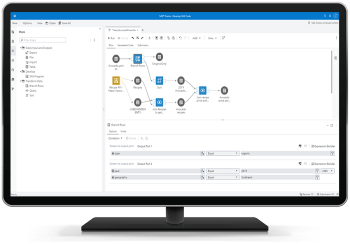
- SAS provides industry-proven solutions to build data pipelines and deliver validated data to support downstream analytics and decisioning processes.
Proven AI models for risk, fraud & optimization

- We've been applying advanced analytics and AI to the toughest business problems for decades.
- Our solutions are built on proven, powerful analytics and AI, resulting in the best decisions.
Decisions optimized for real-world outcomes

- Automate, scale and embed analytically driven decisions into frontline business operations.
- Speed time to insight with analytic decisioning solutions tailored to business functions – fraud prevention, credit risk management, customer experience, IoT and beyond – across industries.
Real-time decision automation at scale
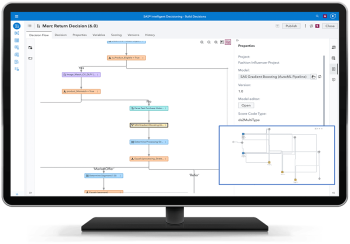
- Integrate analytical models with business rules and rapidly deploy to make decisions.
- Manage, monitor and retrain models to ensure they consistently deliver the best insights.

Organizations using SAS for decisioning


Recommended products & solutions
- SAS® Decision BuilderExplore SAS Decision Builder, the decision intelligence platform from SAS and Microsoft for better decision making.
- SAS® Intelligent DecisioningEasily create, manage and govern robust, analytical and business rule-based processes to power decision intelligence and agentic workflows at scale.



SAS decisioning frequently asked questions
What is decisioning?
Decisioning uses analytics and business rules to guide or automate decisions in real time, enabling organizations to act faster, more accurately and consistently.
Why is decisioning important?
It improves decision accuracy, reduces risk and enhances customer experiences by embedding insights directly into business workflows.
Which industries use decisioning?
Decisioning is applied in banking; retail; insurance; manufacturing; health care; public sector; and telecom, media and technology to optimize operations and drive better outcomes.
How does SAS decisioning help organizations?
SAS decisioning provides analytics, AI and industry-tested tools to connect insights to decisions, automate workflows, monitor results and continuously improve performance.
Can decisioning work in real time?
Yes. SAS decisioning can process high-volume data instantly, enabling automated or guided decisions for immediate business impact.
How does decisioning improve customer experiences?
By using real-time insights to deliver personalized offers, timely recommendations and consistent interactions, decisioning helps customers feel understood and valued.