What is SAS Clinical Acceleration?
SAS Clinical Acceleration is a cloud-based platform for managing, transforming, analyzing and preparing clinical research data for regulatory submission. It combines a secure clinical data repository, statistical computing environment and AI-assisted clinical data transformation capabilities to help life sciences organizations accelerate clinical development while maintaining traceability, transparency and regulatory compliance.
What are the benefits of SAS Clinical Acceleration?
SAS Clinical Acceleration provides a secure, flexible and compliant platform for clinical research, helping organizations streamline regulatory submissions and improve collaboration. Key benefits include:
-
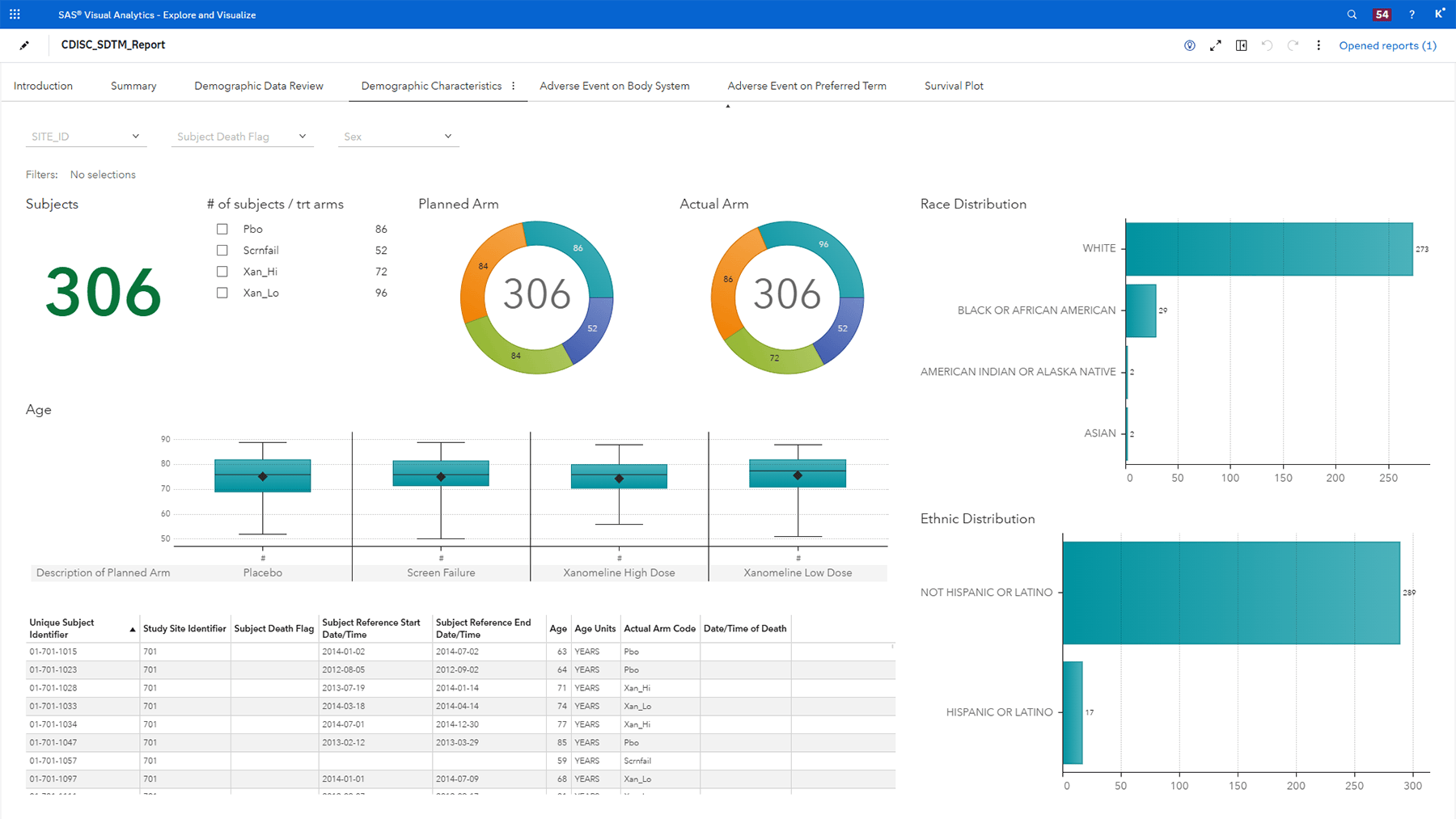
Empower teams with SAS Viya functionality
Built on SAS Viya, the platform enables visualizations, collaborative workflows and scalable access in a controlled environment. Teams can prepare real-world data for analysis and submission more efficiently, enhancing productivity and innovation.
-
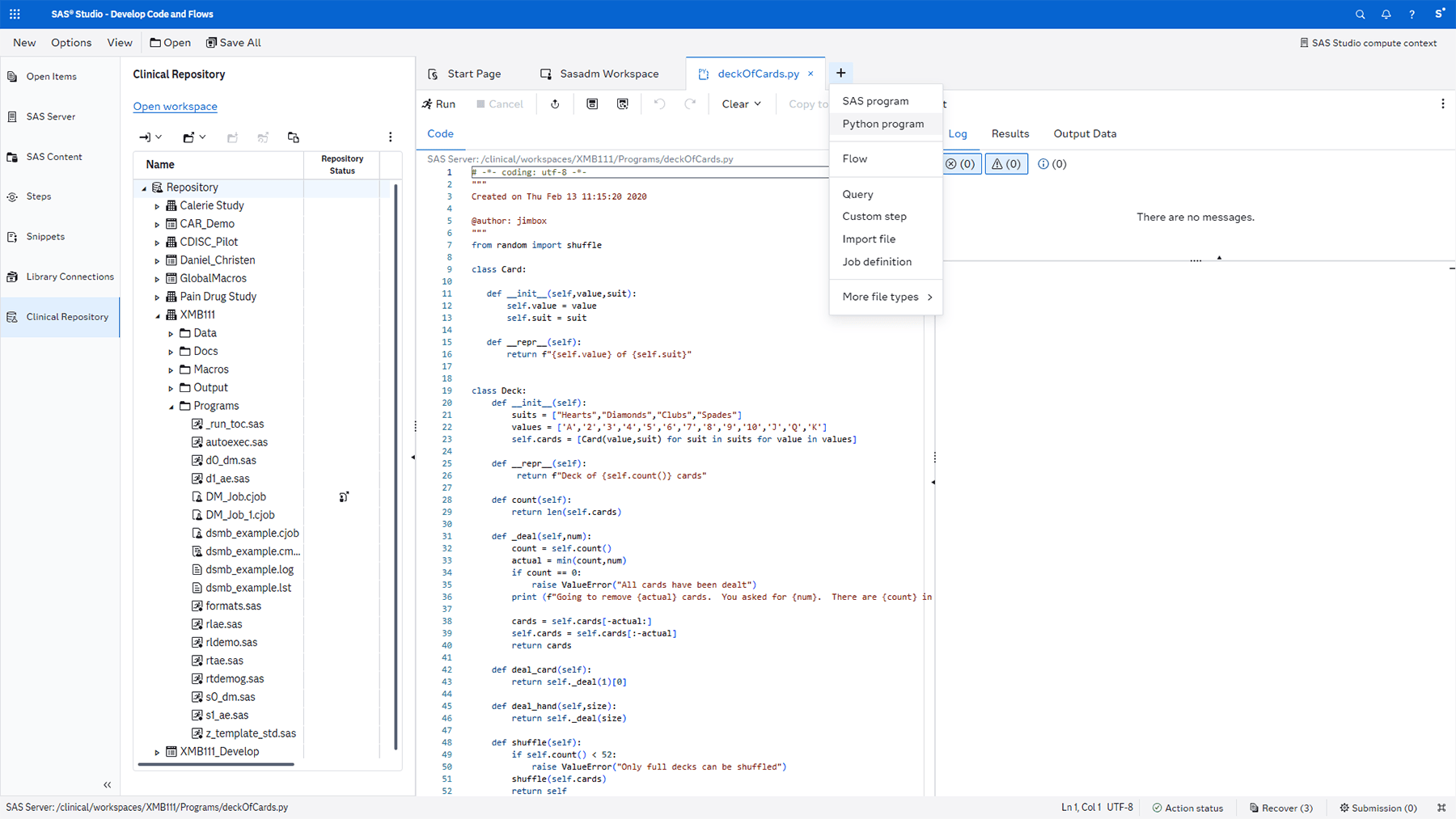
Increase flexibility with multilanguage support
Users can perform analyses using SAS, R or Python in a governed environment. This single, open platform provides flexibility for diverse programming needs while maintaining validation and compliance.
-
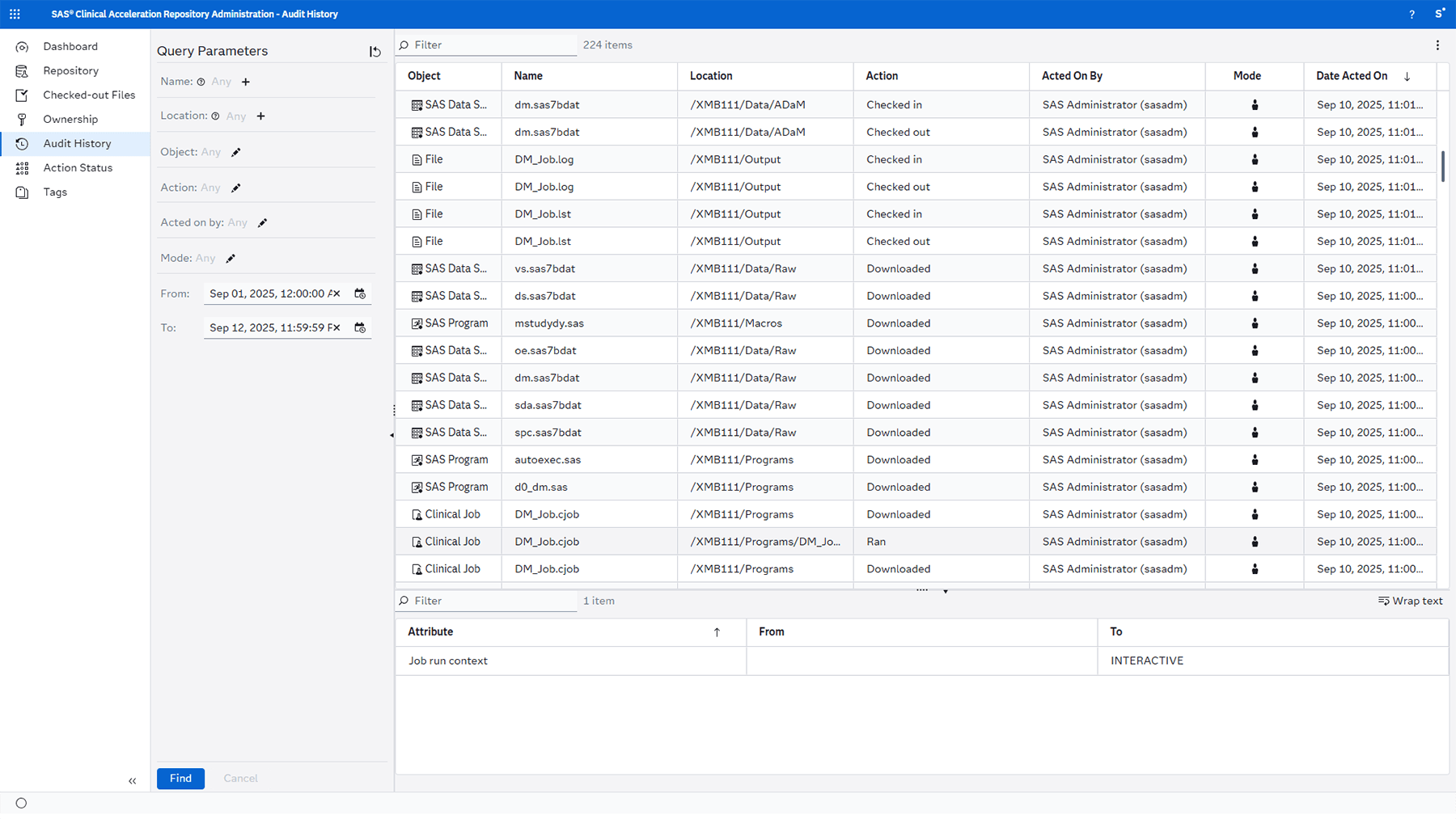
Avoid regulatory delays & reduce risk
SAS Clinical Acceleration ensures auditable actions, data traceability and repeatable analyses. This reduces the risk of noncompliance and helps organizations accelerate regulatory submissions.
-
Maintain data integrity & compliance
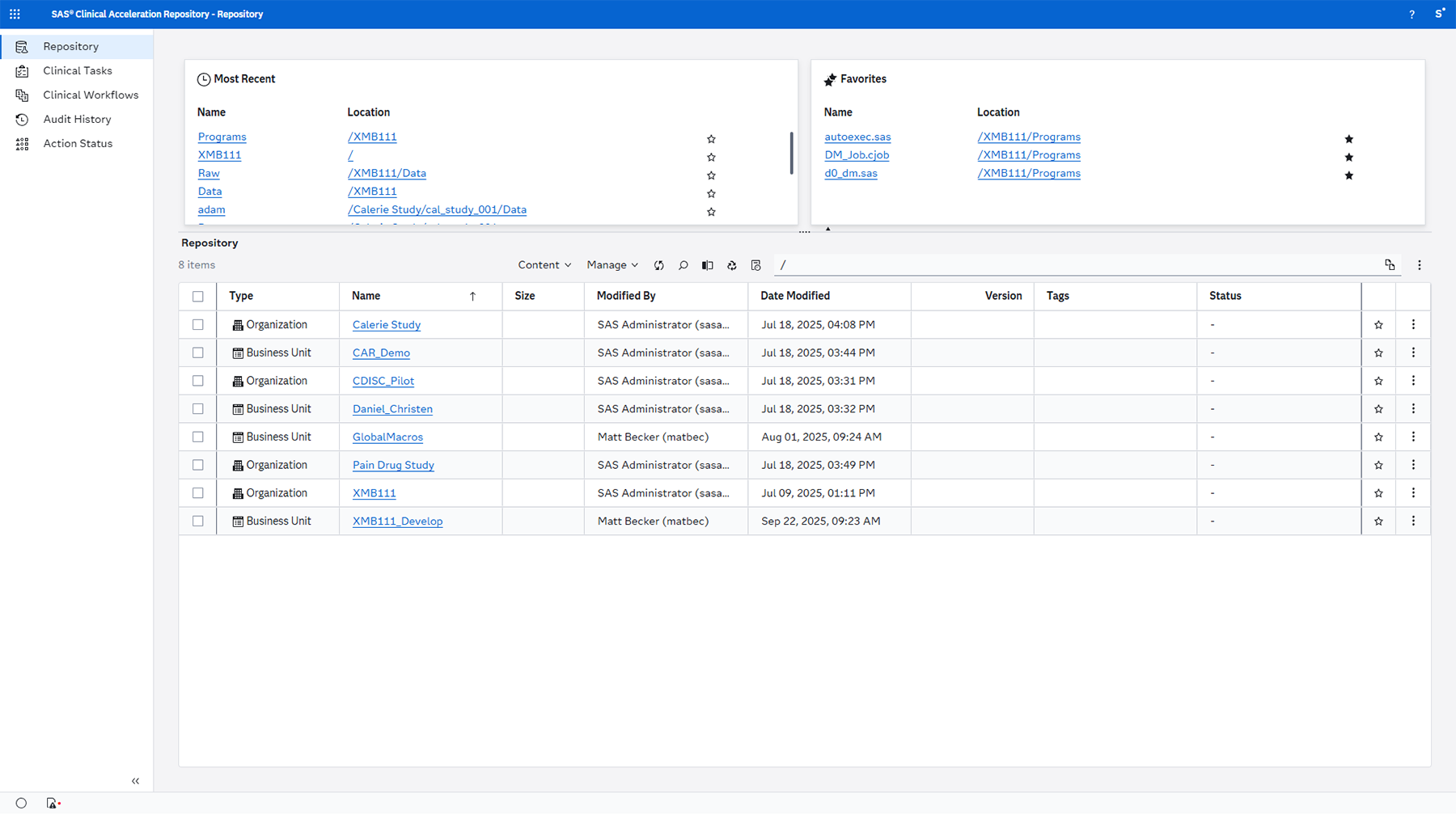
SAS Clinical Acceleration provides a secure, production-ready clinical data repository that supports roles, permissions, electronic signatures, version control and audit trails. This ensures data integrity and helps organizations stay compliant with regulatory standards.
-

Transform clinical data faster with AI-assisted standardization
SAS Clinical Data Transformation accelerates the creation of trusted, submission-ready clinical data sets with AI-assisted mapping recommendations, reusable transformation assets and transparent review workflows. Experts remain in control with reviewable SAS code, traceable decisions and transparent, governed workflows.
-
Integrate large & diverse data sets
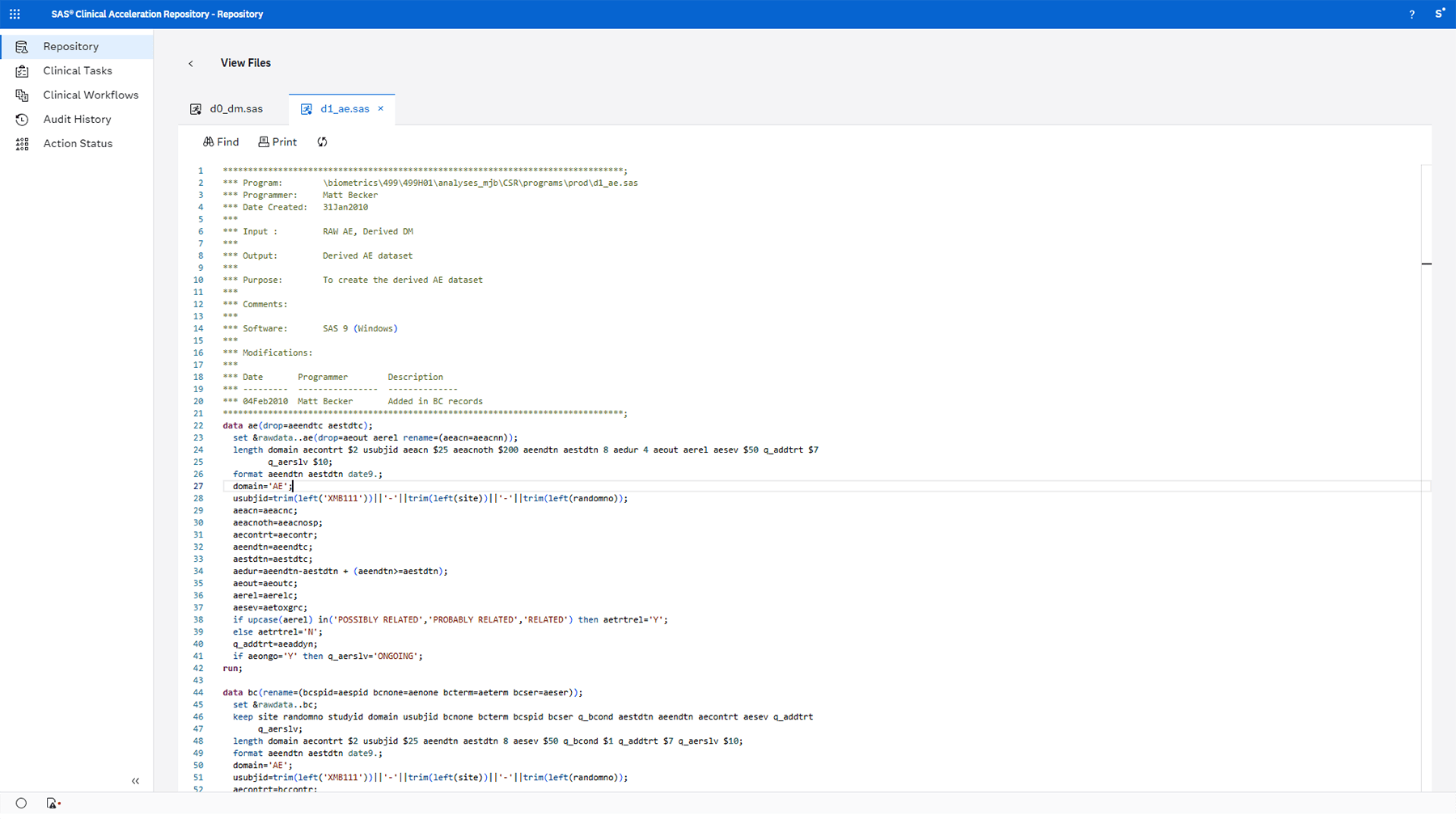
Connect data from EDC systems, CDMSs, laboratories and CROs into a centralized repository. By bringing diverse data sources together in a single governed environment, teams can streamline downstream preparation, analysis and submission activities.
Get to know SAS Clinical Acceleration: A modern tool for clinical analysis and submission
Key features of SAS Clinical Acceleration for clinical research
Manage and analyze information in a collaborative platform, streamline processes and more efficiently deliver trial results to regulatory authorities.
Centralized global repository
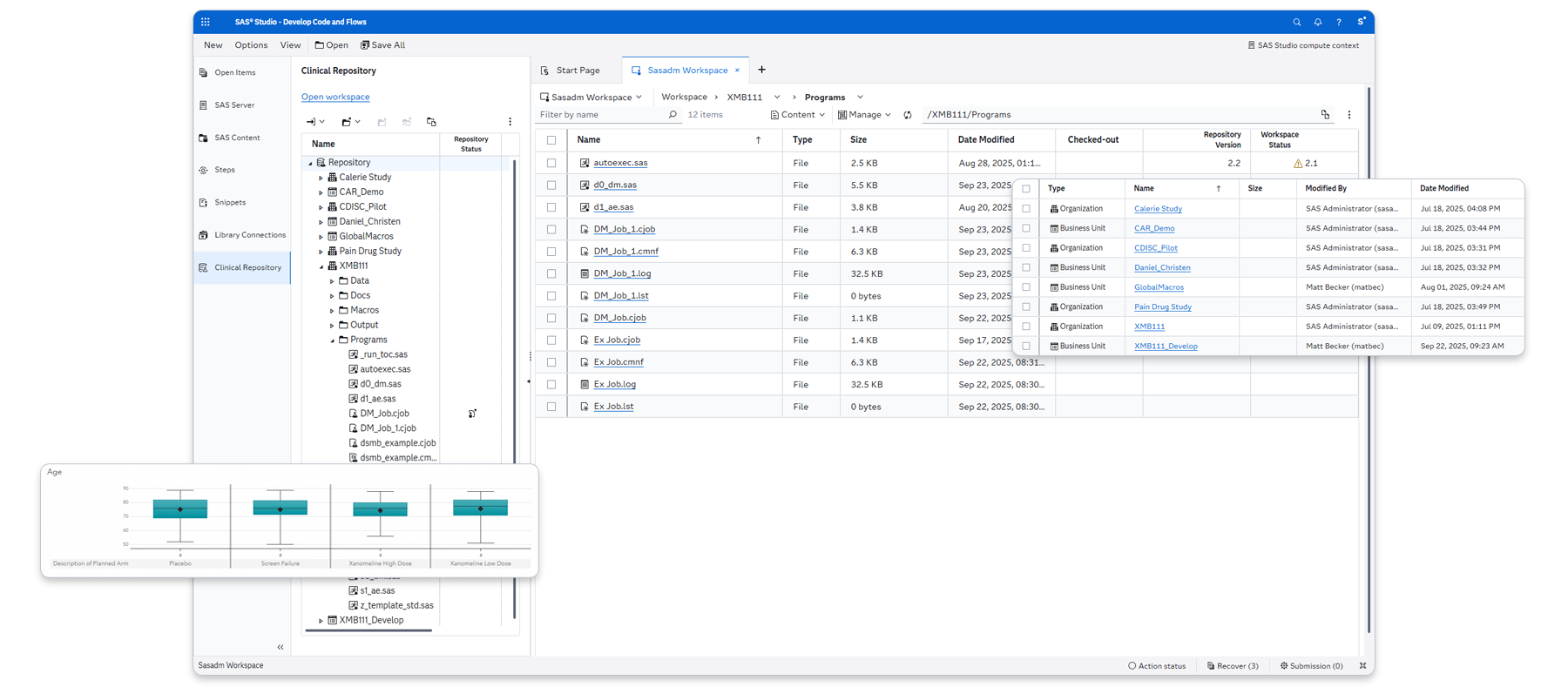
Consolidates clinical information into a single, secure, centralized hub for improved data management and analytical data preparation. Provides full tracing back to source data. SAS Clinical Acceleration Repository is available as a standalone repository solution or with the statistical computing environment as part of SAS Clinical Acceleration.
Single, open, cloud-native SCE
Provides an end-to-end platform for clinical analysis and submission on SAS Viya with everything you need for validation.
Regulatory compliance & data security
Enables compliance with the FDA’s Title 21 CFR Part 11 requirements via audit trails, electronic signatures, versioning and role-based privileges. Complies with CDISC and its initiatives – dataset-JSON and CDISC CORE.
Maximum flexibility
Meet your organization’s unique needs with a flexible solution that includes accessibility for all user types, open source integration, open data formats and the ability to host anywhere.
Shared, scalable platform
SAS Viya enables collaboration through a shared platform where all user types can work together. Provides seamless integration across geos and with outsourced partners.
SAS Viya benefits in a controlled environment
Enables your organization to leverage the benefits of SAS Viya, such as industry-leading visualizations, access modules, and jobs and flows, in a controlled environment for clinical research.
AI-assisted clinical data transformation
Accelerate clinical data standardization with AI-assisted mapping recommendations, reusable transformation assets and human-review workflows. Generate reviewable SAS code and create trusted, submission-ready data sets with the traceability and transparency needed to keep experts in control.
Seamless integrations
Supports integration with electronic data capture (EDC), validation tools and the metadata repository.
SAS Clinical Acceleration frequently asked questions
What is SAS Clinical Acceleration?
SAS Clinical Acceleration is a cloud-based clinical research platform that helps life sciences organizations manage, transform and analyze clinical data and prepare it for regulatory submission. It combines a secure clinical data repository, statistical computing environment and AI-assisted clinical data transformation capabilities.
What is the difference between SAS Clinical Acceleration and SAS Clinical Acceleration Repository?
SAS Clinical Acceleration combines a secure clinical data repository with a statistical computing environment for clinical analysis and regulatory submission. SAS Clinical Acceleration Repository is also available as a standalone solution for organizations that need clinical data management and governance capabilities without the statistical computing environment.
How does SAS Clinical Acceleration support regulatory compliance?
SAS Clinical Acceleration supports regulatory compliance with audit trails, electronic signatures, version control and role-based privileges. It provides a secure, governed environment that maintains data integrity, traceability and reproducibility throughout the clinical data life cycle and supports FDA Title 21 CFR Part 11 requirements and CDISC initiatives.
What types of data can SAS Clinical Acceleration handle?
SAS Clinical Acceleration can manage clinical data and related files, including programs, documents and PDFs, from sources such as electronic data capture (EDC) systems, clinical data management systems (CDMSs), laboratories and contract research organizations (CROs). It can also consolidate real-world data and other diverse data sources in a secure, centralized repository for analysis and regulatory submission.
Can I use SAS, R or Python with SAS Clinical Acceleration?
Yes. SAS Clinical Acceleration supports SAS, R and Python through SAS Viya, giving clinical research teams flexibility to use multiple programming languages for analysis in a governed and validated environment.
How can I accelerate clinical data standardization and preparation for regulatory submission?
SAS Clinical Acceleration supports clinical data transformation with AI-assisted mapping recommendations, reusable transformation assets, reviewable SAS code and governed human-review workflows. These capabilities help teams transform raw clinical data into trusted, standardized data sets and accelerate preparation for analysis and regulatory submission.
How does SAS Clinical Acceleration use AI?
SAS Clinical Acceleration uses AI to assist with clinical data transformation and standardization. AI-assisted mapping recommendations help teams transform clinical data more efficiently, while reviewable SAS code, traceable decisions and human-review workflows provide transparency and keep clinical experts in control.
What are the benefits of SAS Clinical Acceleration on SAS Viya?
SAS Viya provides SAS Clinical Acceleration with scalable analytics, visualizations, collaborative workflows, multilanguage programming and AI capabilities in a governed environment. This helps clinical research teams work more efficiently, collaborate across functions and apply analytics, AI and automation while maintaining transparency and control.


