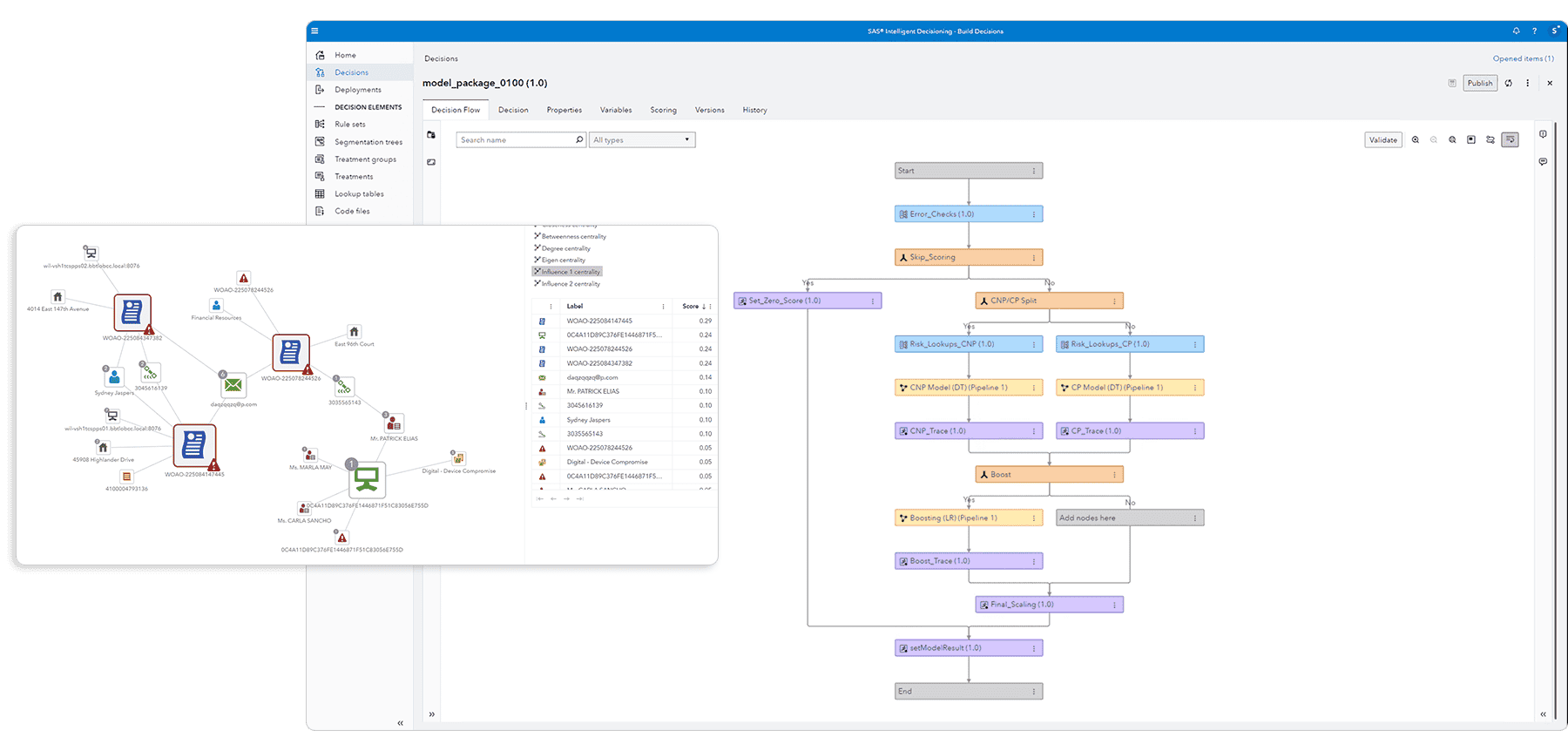
What is SAS Fraud Decisioning?
SAS Fraud Decisioning is a cloud-native fraud detection and prevention solution on SAS Viya that helps financial institutions detect, prevent and investigate fraud in real time. It combines AI, machine learning, predictive analytics, real-time decisioning and data orchestration to identify suspicious activity and respond to fraud threats as they emerge.
SAS Fraud Decisioning helps address payment, account takeover, application, synthetic identity, check and digital fraud while reducing false positives and protecting legitimate customer interactions.
How SAS Fraud Decisioning works
SAS Fraud Decisioning combines real-time data, AI, machine learning and decisioning to help financial institutions detect, prevent and investigate fraud as it occurs. Analyze transactions and customer activity across channels, enrich fraud decisions with internal and external data, and continuously optimize fraud strategies to respond to evolving threats.
-
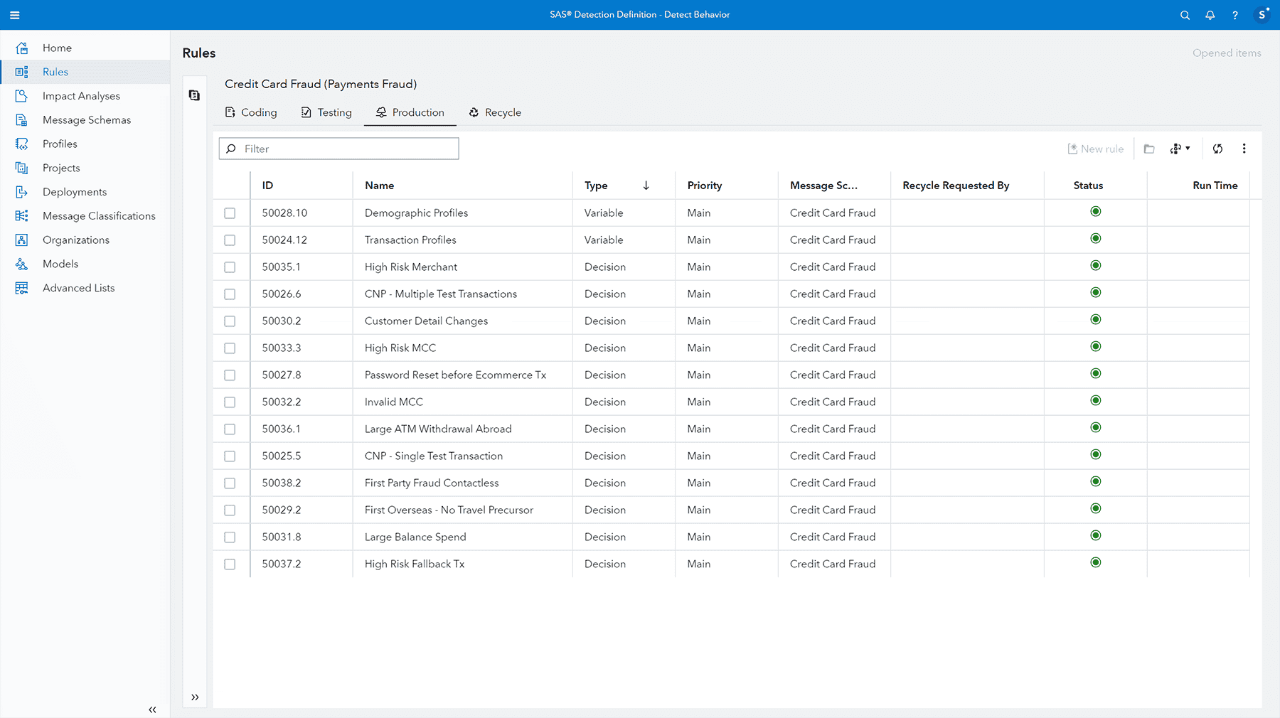
Reduce false positives & customer friction
Reduce false positives by profiling customer behavior across transaction types and channels to improve fraud detection accuracy. When activity requires further review, integrated alert triage and investigation workflows support analyst-led reviews, while automated decisioning allows legitimate transactions to proceed with less friction.
-
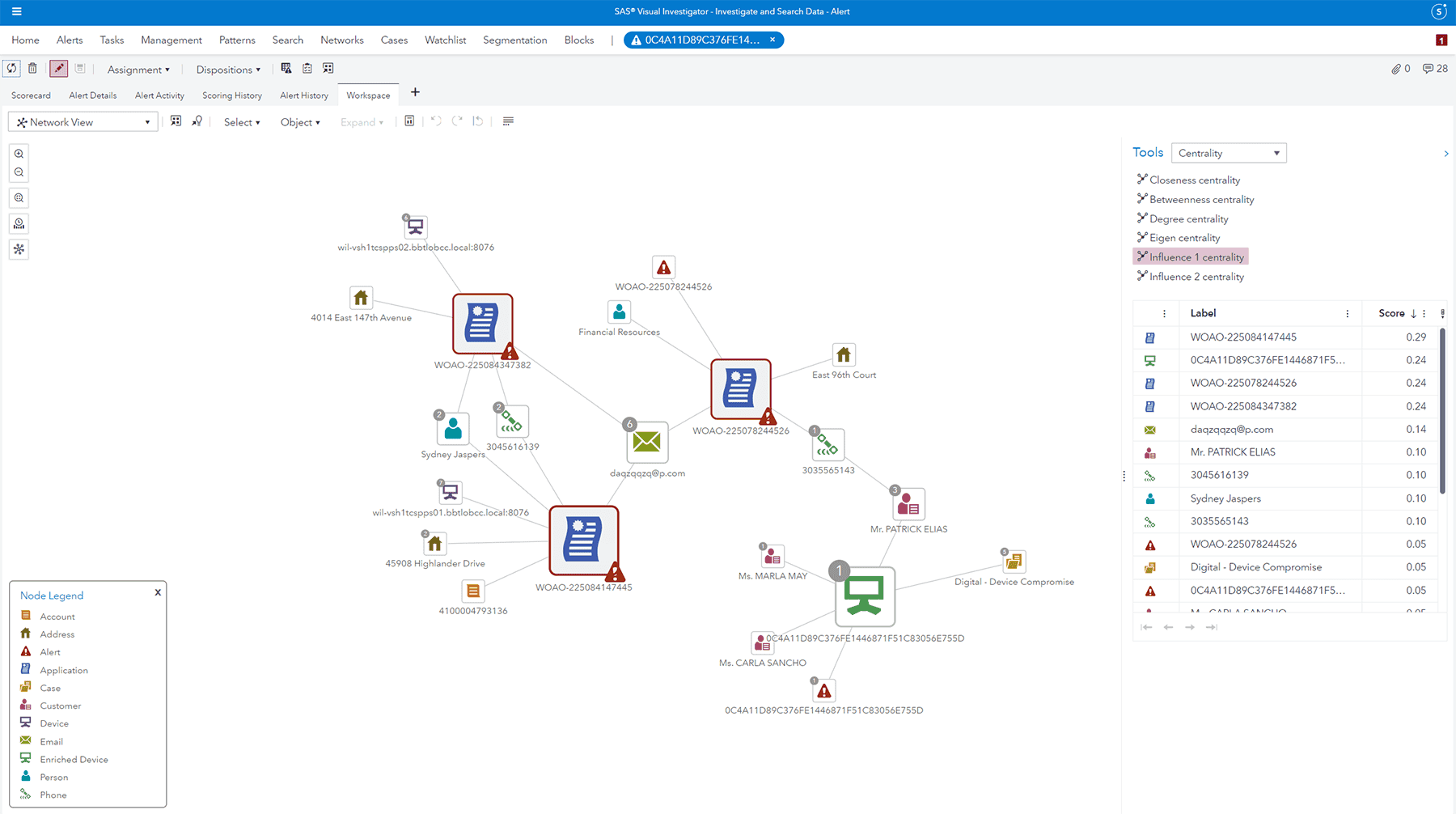
Respond faster to fraud threats
Profile, score and evaluate 100% of transactions in real time using high-throughput, low-latency processing. Detect suspicious activity and take action immediately while minimizing delays for legitimate customers.
-
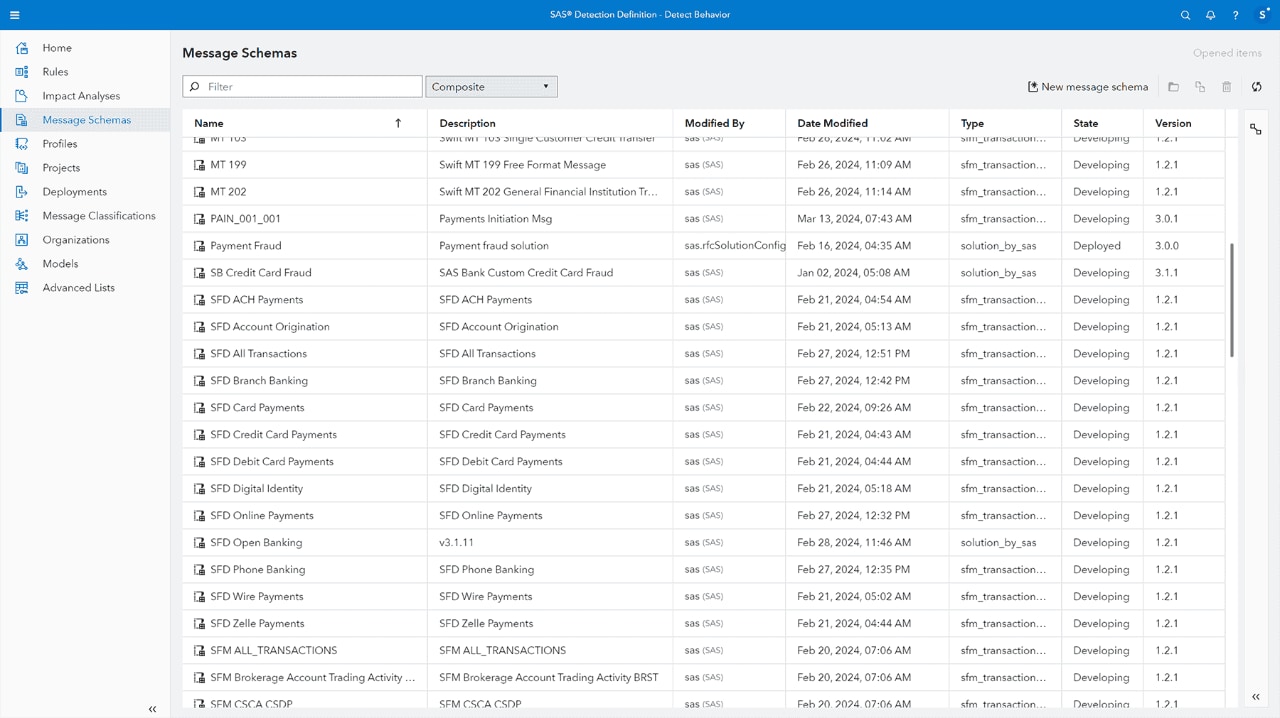
Gain a holistic view of fraud risk
Connect internal systems, external fraud intelligence and customer interactions to enrich transaction context, uncover hidden relationships and improve fraud detection accuracy.
-

Create detection rules in seconds with SAS Viya Copilot
Transform business requirements into detection rules using natural language. AI-assisted rule authoring helps fraud teams accelerate strategy development, reduce coding complexity and adapt more quickly to changing fraud patterns.
-
Improve fraud strategies & decisioning
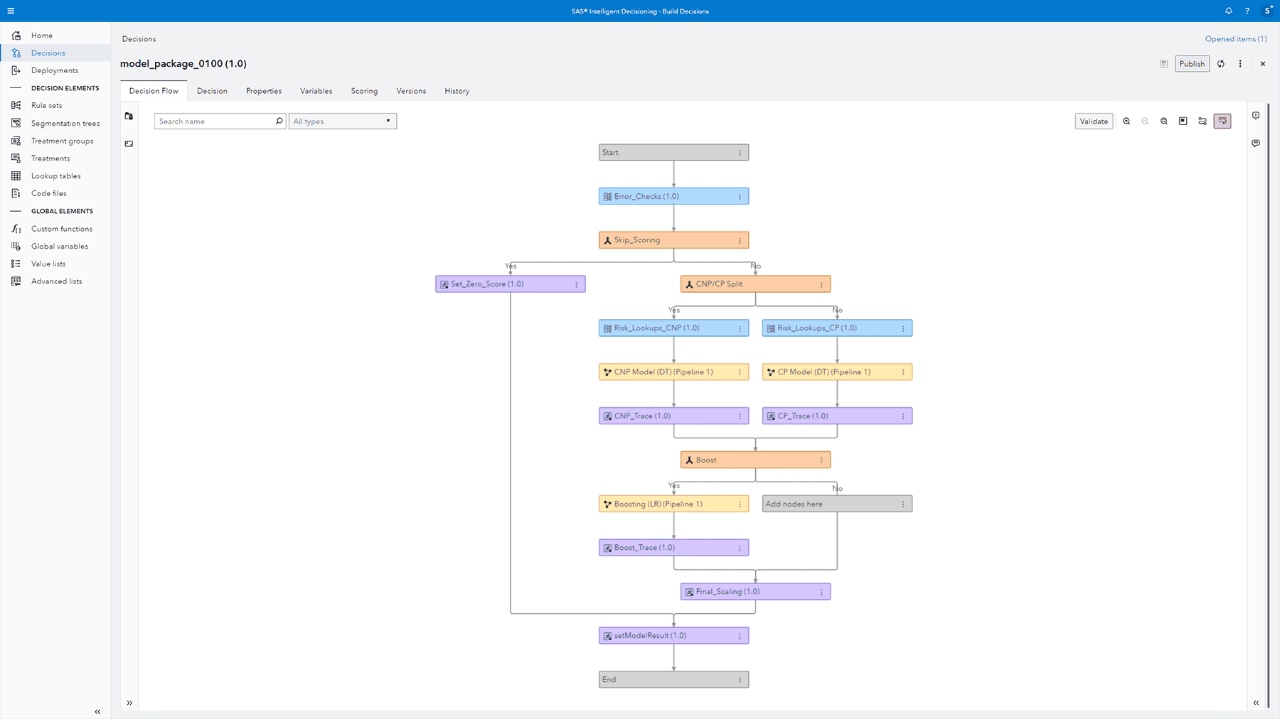
Combine business rules, anomaly detection, machine learning models and real-time decisioning to develop and optimize fraud strategies. Champion-challenger testing and AI-assisted rule authoring help fraud teams respond quickly to new threats while maintaining human oversight.
-
Scale fraud detection with cloud-native architecture
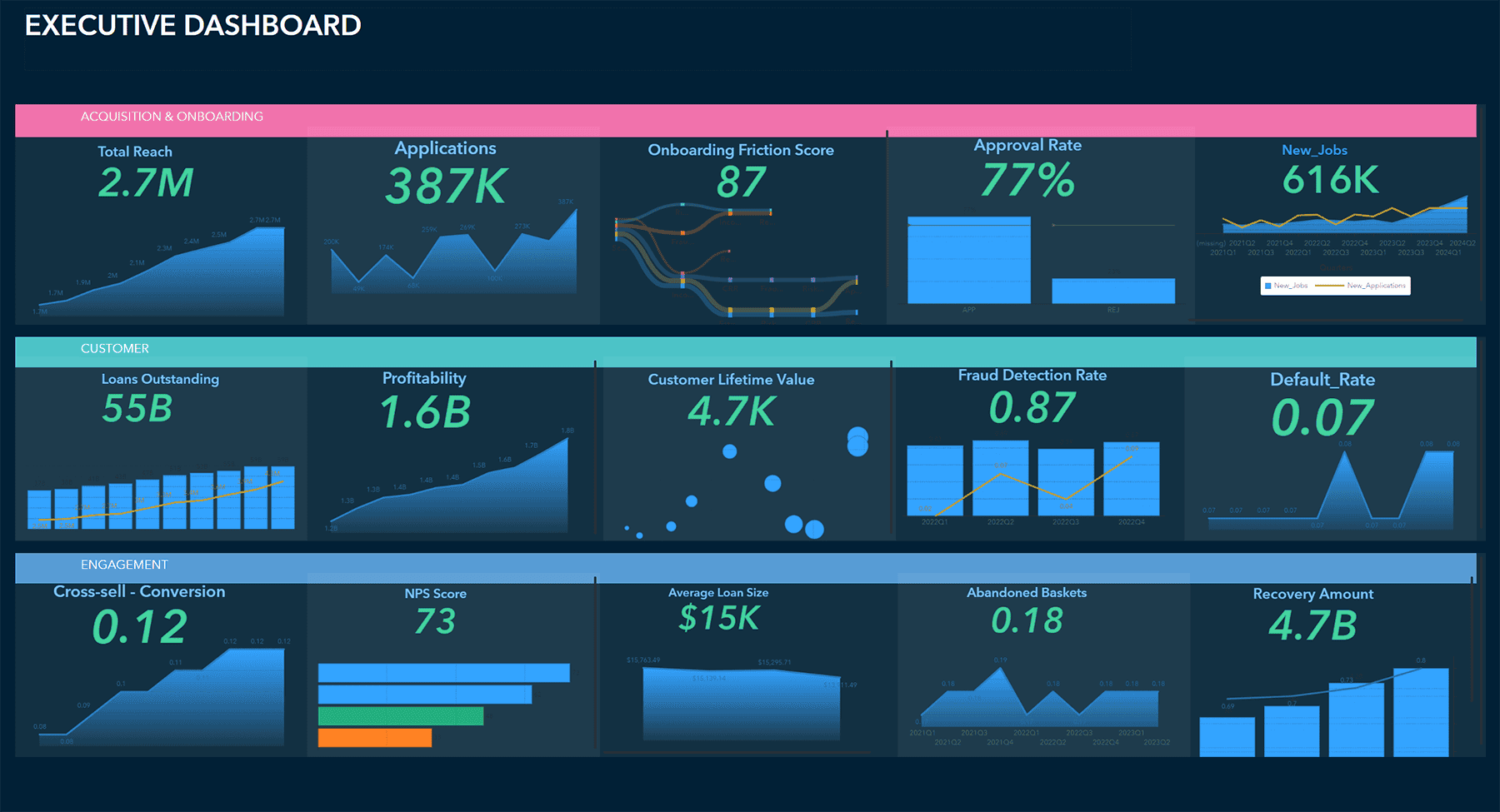
Support growing transaction volumes with secure, scalable cloud-native infrastructure designed for fraud detection and real-time decisioning. Flexible deployment and elastic computing help organizations scale while reducing infrastructure complexity.
Extend your fraud strategies with advanced fraud models
Accelerate fraud detection with prebuilt fraud models designed to complement your existing SAS Fraud Decisioning environment. These models help organizations identify emerging fraud threats faster while strengthening real-time decisioning across high-volume transaction environments.

Prebuilt fraud models
Deploy production-ready fraud models that are designed for real-time fraud detection and decisioning at enterprise scale, helping teams reduce implementation time and accelerate value.

Advanced threat detection
Leverage broader transaction behavior patterns to identify emerging fraud schemes, suspicious activity and evolving attack vectors earlier.

Seamless strategy integration
Integrate advanced fraud models with existing business rules, machine learning models and decision strategies to strengthen fraud detection performance without disrupting operations.
Fraud detection & prevention use cases
SAS Fraud Decisioning helps financial institutions detect, prevent and investigate fraud across payments, account onboarding, customer authentication and digital commerce channels.
Payment fraud & payment scam detection
Use industry-leading fraud analytics and machine learning to monitor payments, nonmonetary transactions and events to detect payment fraud, payment scams and social engineering.
Money mule & funnel account detection
Detect money mule activity, funnel accounts and account takeover fraud by monitoring customer activities, transaction behavior and account maintenance events across channels in real time.
Synthetic identity & application fraud detection
Identify synthetic identities and application fraud earlier by combining identity verification, behavioral analytics and fraud risk assessment during customer onboarding.
Check fraud detection & prevention
Quickly access all data relevant to making a risk assessment of a check transaction, including past customer activity, transaction details and check image analysis discoveries.
Application & bust-out fraud prevention
Prevent bust-out fraud before it arises by assessing the risk of new-to-bank credit applications with a lower referral rate and straight-through processing.
E-commerce fraud detection
Detect fraudulent e-commerce transactions across merchants and third-party payment processors while minimizing friction for legitimate customers.
Remote identity verification & fraud prevention
Improve digital onboarding and customer authentication by incorporating third-party identity data, fraud signals and verification services into real-time fraud decisions.
Emerging fraud threat detection
Use machine learning, adaptive analytics and prebuilt fraud models to identify evolving fraud patterns and emerging attack vectors before they lead to significant losses.


Key features
SAS Fraud Decisioning runs on SAS Viya, combining real-time fraud detection, fraud analytics, machine learning, data enrichment, orchestration and decisioning; model management and governance; alert triage and case management; dashboards and reporting; and prebuilt fraud models on a cloud-native platform for enterprise fraud management.
Cloud-native fraud decisioning
Deploy fraud detection and decisioning capabilities in cloud environments that can scale to support changing transaction volumes and business demands. Open integration, flexible deployment options and elastic computing resources help maintain performance while optimizing operational costs.
Real-time profiling, scoring & decisioning
Build customer trust by profiling, scoring and decisioning transactions in real time with millisecond response times. Analyze 100% of transactions as they occur to identify suspicious activity, stop fraud losses and protect legitimate customer interactions.
AI-powered fraud detection & analytics
Machine learning, adaptive analytics and anomaly detection techniques help identify emerging fraud threats, uncover hidden patterns and automatically recommend new rules and scenarios. Continuously improve fraud detection accuracy while reducing false positives and adapting to evolving fraud schemes.
Flexible data orchestration
Orchestrate internal and external data sources to provide the context needed for accurate fraud detection and decisioning. Integrate transaction, customer, account and third-party data regardless of source or format while leveraging in-memory processing for high-performance analytics.
Data enrichment & third-party integration
Enrich fraud decisions with customer, transaction and third-party data sources. Configure how incoming events are transformed, validated and enhanced before entering fraud detection workflows, helping improve risk assessment and decision accuracy.
Fraud strategy testing & optimization
Evaluate fraud detection strategies using champion-challenger testing, A/B testing and impact analysis. A rule authoring copilot enables analysts to create and refine fraud rules using natural language, helping accelerate strategy development while maintaining governance through human review, testing and approval workflows.
Prebuilt fraud models
Accelerate fraud detection with prebuilt fraud models designed for high-volume, real-time decisioning environments. These models help identify emerging fraud threats earlier by leveraging broader transaction behavior patterns and can be integrated with existing rules, models and fraud strategies.
SAS Viya is cloud-native and cloud-agnostic
Consume SAS how you want – SAS managed or self-managed. And where you want.






SAS Fraud Decisioning frequently asked questions
What is SAS Fraud Decisioning?
SAS Fraud Decisioning is a cloud-native fraud detection and prevention solution on SAS Viya that helps financial institutions detect, prevent and investigate fraud in real time. It combines AI, machine learning, predictive analytics, real-time decisioning and data orchestration to identify suspicious activity and respond to fraud threats across the customer life cycle.
How does SAS Fraud Decisioning detect fraud in real time?
SAS Fraud Decisioning profiles, scores and evaluates transactions and customer events as they occur. It combines business rules, machine learning models, analytics and real-time data to assess fraud risk and determine the appropriate action, helping organizations stop suspicious activity while minimizing friction for legitimate customers.
What types of fraud can SAS Fraud Decisioning help detect and prevent?
SAS Fraud Decisioning helps financial institutions address payment fraud, payment scams, account takeover fraud, application fraud, synthetic identity fraud, check fraud, e-commerce fraud and other digital fraud. It can also help identify money mule activity, funnel accounts, bust-out fraud and emerging fraud threats.
How does SAS Fraud Decisioning reduce false positives?
SAS Fraud Decisioning uses customer behavior, transaction patterns, machine learning, analytics and contextual data to improve fraud risk assessment. By combining these signals with business rules and real-time decisioning, organizations can distinguish suspicious activity from legitimate customer behavior and reduce unnecessary alerts and customer friction.
Can SAS Fraud Decisioning analyze 100% of transactions in real time?
SAS Fraud Decisioning is designed to profile, score and evaluate transactions in real time using high-throughput, low-latency processing. This enables financial institutions to analyze transactions as they occur and make fraud decisions without delaying legitimate customer interactions.
How does SAS Fraud Decisioning use machine learning and AI?
SAS Fraud Decisioning combines machine learning, predictive analytics, anomaly detection and business rules to identify suspicious patterns and emerging fraud threats. Fraud teams can also use AI-assisted rule authoring to create and refine fraud rules with natural language, while human review, testing and approval workflows support governance.
How does SAS Fraud Decisioning use data to improve fraud detection?
SAS Fraud Decisioning connects transaction, customer, account and external fraud data through flexible data orchestration and enrichment. Bringing these data sources together provides additional context for fraud risk assessment and helps improve the accuracy of real-time fraud decisions.
Can SAS Fraud Decisioning integrate with existing fraud systems and data sources?
Yes. SAS Fraud Decisioning can connect to internal systems, external data providers, third-party fraud intelligence sources and existing fraud workflows. Flexible data orchestration and enrichment capabilities help organizations incorporate additional data and context into fraud decisions without replacing existing systems.
How does SAS Fraud Decisioning support fraud investigations?
SAS Fraud Decisioning combines real-time fraud detection with alert triage and investigation workflows. Analysts can review suspicious activity and use customer, transaction and event information to support fraud investigations, while automated decisioning can handle legitimate transactions without unnecessary manual intervention.
How can organizations optimize fraud detection strategies with SAS Fraud Decisioning?
Fraud teams can combine business rules, anomaly detection, machine learning models and decision strategies to develop and optimize fraud detection approaches. Champion-challenger testing, A/B testing and impact analysis help teams evaluate strategies, while AI-assisted rule authoring can accelerate the creation and refinement of fraud rules.
What are SAS Fraud Decisioning fraud models?
SAS Fraud Decisioning fraud models are prebuilt fraud detection models designed for high-volume, real-time decisioning environments. They use broader transaction behavior patterns to help identify emerging fraud threats and can be integrated with existing rules, models and fraud strategies.
Who uses SAS Fraud Decisioning?
SAS Fraud Decisioning is designed for banks, credit unions, payment providers and other financial institutions that need to detect, prevent and investigate fraud across transactions, customer onboarding, authentication and digital commerce.
Where can SAS Fraud Decisioning be deployed?
SAS Fraud Decisioning runs on SAS Viya, which supports cloud-native deployment options. Organizations can consume SAS Viya through SAS-managed or self-managed environments based on their deployment requirements.
How does SAS support a unified FRAML approach to financial crime risk management?
SAS supports a Fraud and Anti-Money Laundering (FRAML) approach by bringing fraud and AML signals, decisions and investigations together into a more complete view of financial crime risk. By sharing context across teams, organizations can identify hidden connections and improve operational efficiency. This helps organizations make more informed, traceable decisions while strengthening their overall approach to managing financial crime risk.